.png)

Buying an acreage in the Fraser Valley can look straightforward at first. Find a property you like, calculate your expected payments, arrange financing and make an offer.
In practice, rural properties can involve more questions than a typical home connected to municipal water and sewer.
A Fraser Valley acreage may include a private well, septic system, several acres of land, a barn, detached workshop, equestrian facilities or agricultural improvements. The property may also be located within the Agricultural Land Reserve or have zoning that affects how the land and buildings can be used.
None of these features automatically means financing will be difficult. However, they can affect how a mortgage professional, lender or appraiser reviews the property.
That is why buyers researching acreage financing in Fraser Valley, BC should investigate both their own borrowing position and the characteristics of the actual acreage before becoming committed to a purchase.
Start by estimating potential payments with The Valley Life's mortgage calculator, then browse current Fraser Valley acreage listings to see the types of rural properties available.
Important: This article provides general real estate and financing research information only. It does not provide mortgage advice, rates, lending criteria, approval guarantees, legal advice or financial advice. Financing requirements vary by borrower, property and lender. Confirm the details of a specific acreage with a qualified mortgage professional.
Why Financing a Fraser Valley Acreage Can Be Different
Financing a conventional detached home in an established neighbourhood is often easier to compare because there may be many similar properties nearby.
A rural acreage can be much more individual.
For example, one five-acre property may have a modern home, drilled well, recently installed septic system and permitted workshop.
Another five-acre property at a similar price may have an older residence, multiple outbuildings, an aging septic system and agricultural uses.
Although both properties are technically acreages, they may present very different questions during financing and valuation.
A Rural Property Is More Than the Main House
When reviewing an acreage, important property-specific questions can include:
Where does the property's water come from?
Does the home use a private well?
How is wastewater handled?
How large is the parcel?
Is the property in the Agricultural Land Reserve?
What is the zoning?
What buildings are located on the land?
Are the buildings permitted?
Are there additional residences or suites?
Is the property primarily residential, agricultural or mixed-use?
How will the land and improvements be considered during appraisal?
These are the kinds of questions worth raising early with your REALTOR® and mortgage professional.
Why a Private Well Can Matter When Financing an Acreage
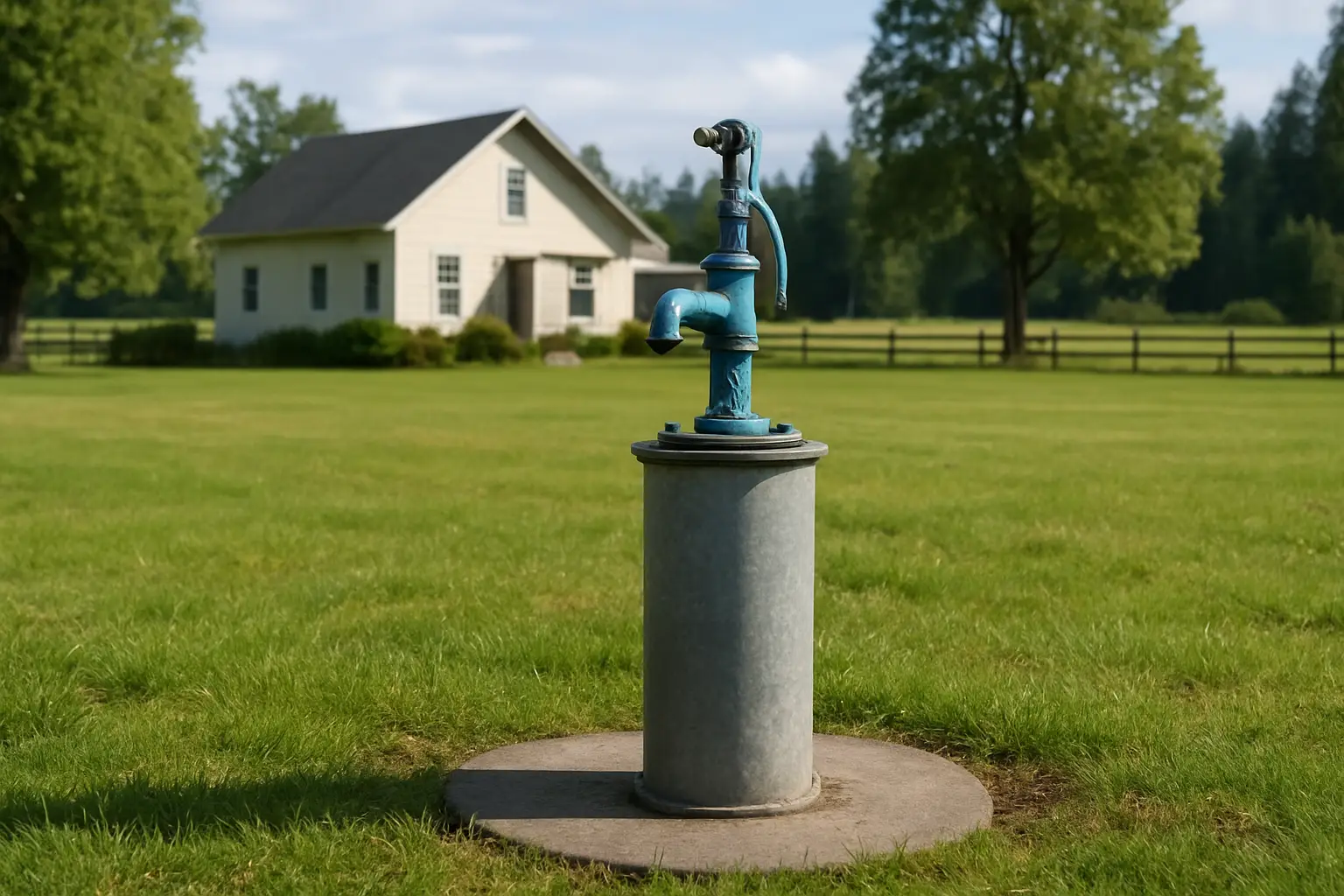
Private wells are common on rural properties throughout communities such as Bradner, Matsqui, Yarrow, Greendale, Mission and other parts of the Fraser Valley.
Unlike a home connected to a municipal water system, an acreage with a private well depends on a water source located on the property.
For buyers, that means the condition and documentation of the well may become part of the property's due diligence.
Information to Look for About the Well
Depending on the property, useful information can include:
well records;
well depth;
construction details;
location of the well;
age of the well;
maintenance history;
recent water-quality testing;
pumping or flow-test information;
treatment equipment, if applicable; and
information about unused wells on the property.
The exact documentation required for financing varies, so buyers should not assume that every lender handles private wells in the same way.
A Useful Question for Your Mortgage Professional
Ask:
“Is there any well documentation or testing you would want to review before financing this particular acreage?”
This is much more useful than asking whether acreages with wells are generally financeable.
The important issue is the actual property you intend to purchase.
Why a Septic System Deserves Attention
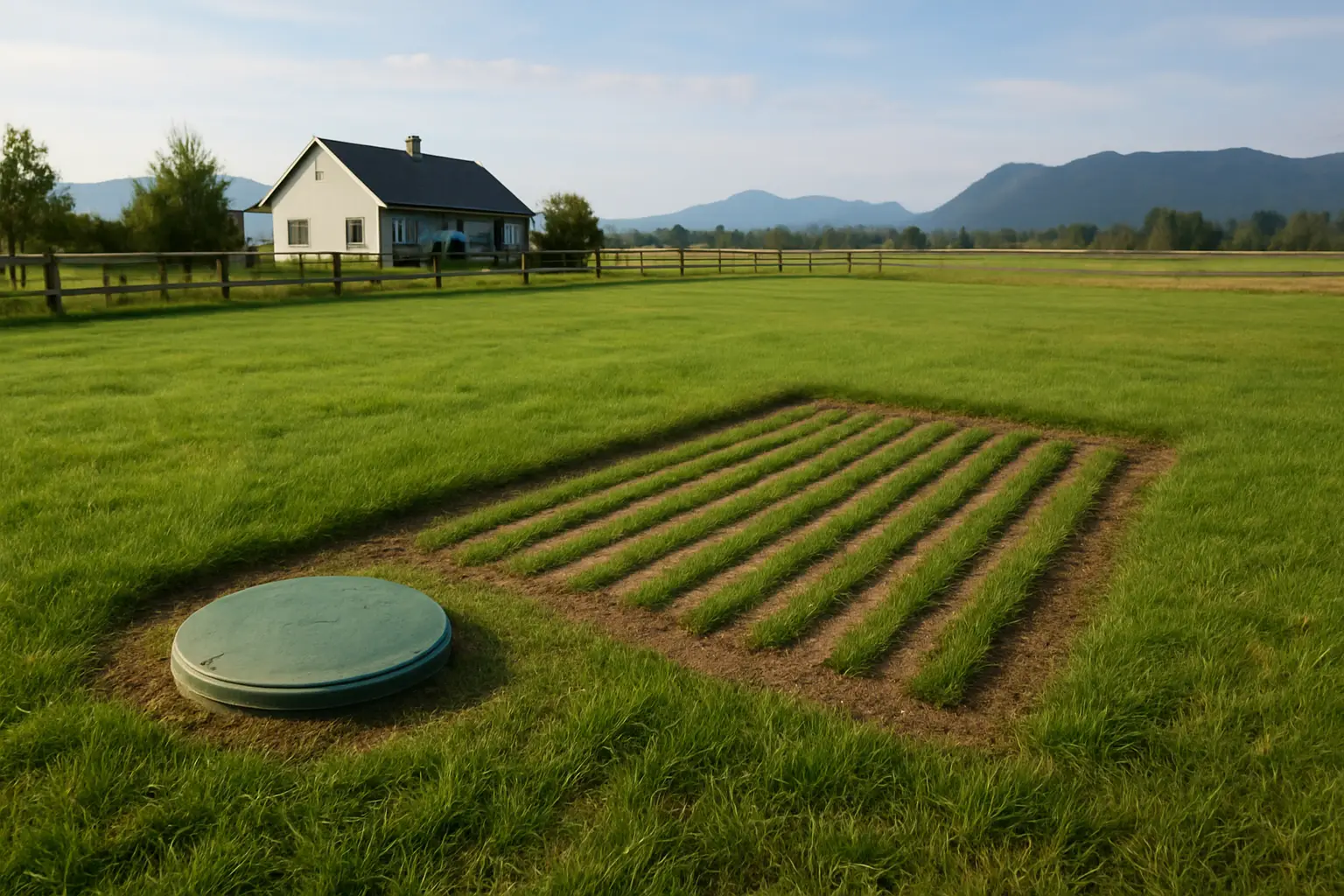
Many Fraser Valley acreages outside municipal sewer-service areas use private septic systems.
Septic systems are normal for rural properties, but buyers should understand what they are purchasing.
The existence of a septic system does not automatically create a financing problem. However, its age, condition, documentation and relationship to the property's buildings may be relevant during due diligence.
Questions to Ask About the Septic System
Try to determine:
where the septic tank is located;
where the disposal field is located;
approximately how old the system is;
when it was last serviced;
whether maintenance records are available;
whether the system has been altered;
what buildings or residences it serves;
whether an inspection has been completed; and
whether appropriate installation or alteration records are available.
A large parcel does not necessarily eliminate septic concerns.
The location of buildings, wells, drainage areas and future plans for the property may all matter.
Do Not Leave Septic Questions Until the Last Minute
If financing or your decision to purchase depends on the condition of the property's septic system, investigate it during your due-diligence period.
Ask your mortgage professional and REALTOR®:
“What septic information should be confirmed before I remove my financing and property conditions?”
How Land Size Can Affect Acreage Financing
One of the biggest differences between a conventional residential property and a Fraser Valley acreage is simply the amount of land involved.
But more land does not automatically mean proportionally more value.
A two-acre rural residential property, a five-acre hobby farm, a ten-acre agricultural property and a large wooded parcel can all have very different markets.
That can affect how easily an appraiser finds comparable sales and how the property is evaluated.
Questions to Raise About the Land
Before making an offer, consider asking:
How will the total acreage be treated during the financing review?
Will the size of the property require a particular type of appraisal?
Are there comparable acreage sales nearby?
Is the property primarily residential or agricultural?
Does the current land use matter?
Does the zoning create additional questions?
Is the entire parcel usable in the way I expect?
These questions are especially important when the property's appeal depends heavily on land rather than only the residence.
Agricultural Land Reserve Considerations
A significant amount of rural land throughout the Fraser Valley is located within British Columbia's Agricultural Land Reserve, commonly known as the ALR.
The ALR is intended to protect agricultural land and prioritize farming uses.
For buyers, ALR status can matter because having enough physical land for a project does not necessarily mean the project is automatically permitted.
For example, a buyer may imagine:
adding another residence;
converting a building into living space;
constructing a larger shop;
operating a business;
subdividing the land; or
changing how an existing building is used.
Those plans may be affected by local zoning, provincial agricultural land rules, permits and other requirements.
Finance What Exists Today
A practical rule when evaluating an acreage is:
Do not base your purchase decision on a future use until you have confirmed that the use is actually permitted.
Your REALTOR®, local government, legal professional and other qualified specialists can help identify which approvals or restrictions may apply.
Why Barns, Shops and Outbuildings Matter
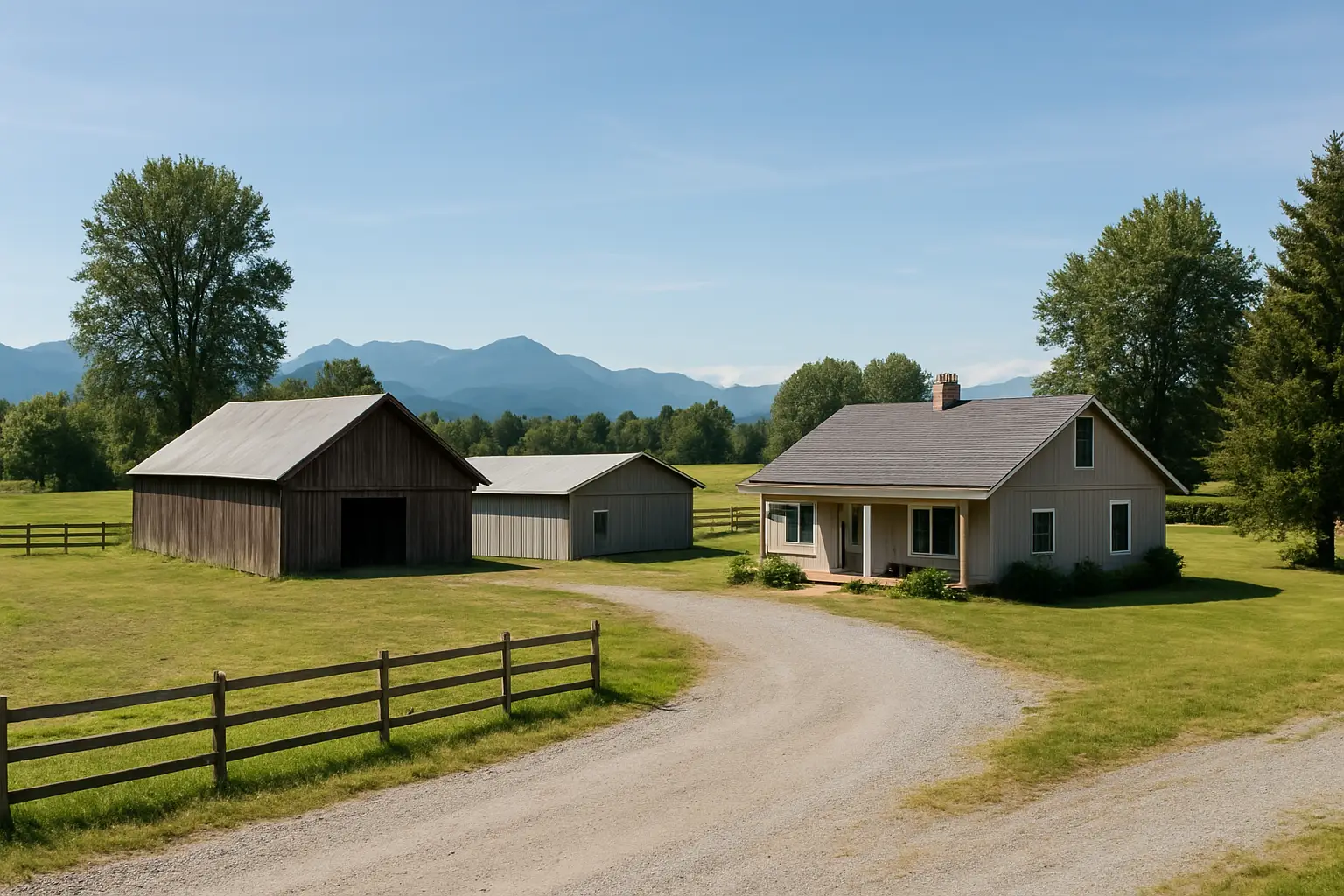
Outbuildings are often a major reason buyers want acreage.
A detached shop can provide space for vehicles, tools or hobbies.
A barn may appeal to buyers with horses or agricultural plans.
Other rural properties may include machine sheds, greenhouses, storage buildings or detached garages.
These buildings can add usefulness and market appeal, but buyers should avoid assuming that the amount spent to build an outbuilding will automatically be reflected dollar-for-dollar in the property's appraised value.
That determination belongs to the appraisal process.
Questions to Ask About Outbuildings
When a property includes a significant barn, workshop or accessory building, investigate:
whether the structure was properly permitted;
what the approved use of the building is;
whether electrical work is documented;
whether plumbing has been added;
whether the structure contains living space;
whether the current use is legal;
the age and overall condition of the building; and
whether the building is accurately represented in property information.
This becomes particularly important when the seller's asking price appears to place substantial value on a custom shop, equestrian facility or other specialized structure.
Be Careful With Converted Buildings and Unapproved Living Space
Some rural properties change gradually over decades.
A workshop may gain a bathroom.
A barn office may become sleeping space.
A detached garage may be marketed as guest accommodation.
An older structure may look like a second residence even though its legal status is unclear.
When reviewing a Fraser Valley acreage, do not assume a space is legally residential simply because someone currently uses it that way.
Ask:
“What is this structure legally approved to be?”
If the value of the property depends heavily on an additional residence, suite or converted outbuilding, investigate its legal status before relying on it as part of your buying decision.
Mortgage Pre-Approval Is Not Property Approval
This is one of the most important points for anyone considering rural property financing in BC.
A mortgage pre-approval can help you understand an approximate purchase range based on your finances.
It does not mean that every property within that price range is automatically approved.
The specific property still needs to be reviewed.
For a standard suburban home, the property-review stage may be relatively straightforward.
For an acreage with multiple buildings, private services, agricultural zoning or unusual improvements, additional questions may arise.
Send the Actual Listing to Your Mortgage Professional
Once an acreage becomes a serious possibility, provide your mortgage professional with the actual property information.
Do not rely only on a conversation such as:
“I am approved up to this amount.”
Instead ask:
“Can you review this particular property and let me know what information may be needed before I make my financing condition firm?”
Questions to Ask Before Making an Offer on an Acreage
A few targeted questions can help you identify potential financing issues earlier.
Questions About the Property
Ask your mortgage professional:
Have you reviewed the actual listing?
Does the acreage size create any additional questions?
Does the private well require documentation or testing?
Is information about the septic system required?
Will the barn, shop or other outbuildings be considered during appraisal?
Does agricultural zoning or ALR status affect the review?
Does the property's current use create any concerns that should be investigated?
Questions About the Appraisal
Consider asking:
Will an appraisal likely be required?
How are rural comparable properties identified?
How are outbuildings generally considered in the overall property valuation?
What happens if the appraised value differs from the agreed purchase price?
Is additional rural-property documentation needed?
Questions About Timing
Ask:
What property documents should I obtain immediately?
What information needs to be reviewed before financing conditions are removed?
How much time may be appropriate for the financing review?
Are there outstanding property issues that should be resolved before the purchase becomes unconditional?
Your REALTOR® can help structure an offer, while your mortgage professional can explain the financing information required for the specific property.
Documents Worth Looking for When Buying Fraser Valley Acreage
Not every property will have every document, but potential buyers may want to look for:
Property Disclosure Statement;
title information;
property survey or site plan;
well records;
recent water-quality results;
well flow or pumping-test information;
septic installation records;
septic maintenance records;
septic inspection information;
permits for substantial outbuildings;
occupancy documentation where applicable;
zoning information;
ALR status;
permits relating to additional residences;
documentation for major renovations; and
records relevant to agricultural or non-residential uses.
Missing paperwork does not automatically mean a property cannot be purchased or financed.
It simply means buyers should understand what information is available and what needs further investigation.
Fraser Valley Acreages Are Not All the Same
The Fraser Valley covers a wide range of rural environments.
Properties around Bradner and Matsqui may have a strong agricultural character.
Greendale and Yarrow include rural residential and farming properties.
Langley Township includes hobby farms, equestrian properties and acreages close to increasingly developed neighbourhoods.
Mission and surrounding rural areas can include wooded parcels, hillside properties and larger lots with different access and servicing conditions.
That is why generic assumptions about “acreage financing” are rarely enough.
A financing conversation should be based on the exact property you are considering.
You can explore available options on The Valley Life's Fraser Valley acreage listings page.
A Practical Acreage Buying and Financing Process
Step 1: Estimate Potential Mortgage Payments
Use The Valley Life's mortgage calculator to explore estimated payment scenarios.
Treat the results as a planning tool rather than a mortgage approval.
Step 2: Speak With a Qualified Mortgage Professional
Explain that you are considering rural acreage in the Fraser Valley.
That context matters because the property may include features that are not common in a standard residential purchase.
Step 3: Browse Actual Acreage Listings
Review current Fraser Valley acreage listings.
Pay attention to:
lot size;
well information;
septic information;
zoning;
ALR status;
barns;
workshops;
additional residences; and
current property use.
Step 4: Review the Specific Property
Once you find an acreage you may want to purchase, send the property details to your mortgage professional.
Ask whether any property-specific information is needed before financing can be finalized.
Step 5: Complete Due Diligence
Work with your REALTOR® and relevant qualified professionals to investigate the property's physical condition, servicing, zoning, structures and legal status.
For more information about working through the purchase process, visit Buying With The Valley Life.
Frequently Asked Questions
Can You Get a Mortgage on an Acreage With a Private Well?
Properties with private wells are common throughout rural British Columbia and are not automatically excluded from mortgage financing.
However, the mortgage professional reviewing the transaction may want information about the well or property.
Confirm requirements for the specific acreage rather than assuming all lenders use identical standards.
Can You Finance a Fraser Valley Property With Septic?
Many rural Fraser Valley homes use septic systems.
Having a septic system does not automatically determine whether mortgage financing is available.
Buyers should investigate the system's age, condition and available documentation and discuss any property-specific requirements with their mortgage professional.
Do Outbuildings Increase an Acreage's Mortgage Value?
A barn or shop may contribute to the property's overall market value, but buyers should not assume its construction cost equals its contribution to the appraisal.
The property's market, condition, permitted use and comparable sales can all influence valuation.
Does Pre-Approval Mean I Can Buy Any Acreage Within My Budget?
No.
Mortgage pre-approval primarily relates to your financial position.
The specific property still needs to be reviewed before final financing is confirmed.
Can ALR Status Affect Buying an Acreage?
Yes.
ALR status can affect how land can be used and developed.
Buyers should confirm applicable provincial rules, local zoning and permit requirements before relying on future construction, subdivision or changes of use.
Should I Check the Well and Septic Before Making an Offer?
These issues should be considered early.
The exact timing depends on the transaction, but buyers should discuss appropriate financing and inspection conditions with their REALTOR® and mortgage professional before becoming unconditionally committed.
Research the Acreage, Not Just the Purchase Price
Acreage living in the Fraser Valley can offer privacy, open space, workshops, barns, room for hobbies and access to some of the region's most distinctive rural communities.
But financing an acreage involves more than deciding whether the monthly payment fits your budget.
A private well raises questions about the water supply.
A septic system raises questions about onsite wastewater.
Land size can influence valuation and property use.
ALR status can affect what may be permitted.
Barns and workshops need to be understood as part of the overall property rather than assumed to carry a particular financial value.
The best time to investigate these issues is before your purchase becomes unconditional.
Use The Valley Life's mortgage calculator to estimate potential payments, browse current Fraser Valley acreage listings, and then confirm the financing details of the specific property with a qualified mortgage professional.
If you are ready to move from research to actively viewing properties, learn more about buying with The Valley Life.
 The data relating to real estate on this website comes in part from the MLS® Reciprocity program of either the Greater Vancouver REALTORS® (GVR), the Fraser Valley Real Estate Board (FVREB) or the Chilliwack and District Real Estate Board (CADREB). Real estate listings held by participating real estate firms are marked with the MLS® logo and detailed information about the listing includes the name of the listing agent. This representation is based in whole or part on data generated by either the GVR, the FVREB or the CADREB which assumes no responsibility for its accuracy. The materials contained on this page may not be reproduced without the express written consent of either the GVR, the FVREB or the CADREB.