

A Fraser Valley acreage listing may mention farm status, farm classification or attractive current property taxes.
Those details can be important—but they should never be treated as a guarantee of what a future owner will pay.
In British Columbia, farm classification is an assessment classification administered by BC Assessment. It is based on regulated requirements and the qualifying agricultural use of the land. It is not simply a label that permanently belongs to an acreage because the property is large, rural, located in the Agricultural Land Reserve or has historically been used as a farm.
That distinction matters when buying acreage in Abbotsford, Chilliwack or elsewhere in the Fraser Valley.
A property may currently have farm-classified land because the existing owner operates a qualifying farm. If you buy the property and use it differently, its future classification may also be different.
If you are researching BC farm class property tax on acreage, use this article as a pre-purchase question list rather than a prediction of future taxes.
You can also compare current Fraser Valley acreage listings while keeping these questions in mind.
Important: This article provides general real estate and ownership research only. It is not tax, accounting, legal or financial advice. Farm-class requirements and property-tax treatment can change and depend on the specific property and farm operation. Always confirm current information directly with BC Assessment and the appropriate tax authority before relying on a property's existing classification or tax amount.
What Is BC Farm Classification?
British Columbia has several property assessment classes. Class 9 is Farm.
Farm classification can apply to land that meets the requirements established under provincial legislation and BC Assessment's farm-classification process.
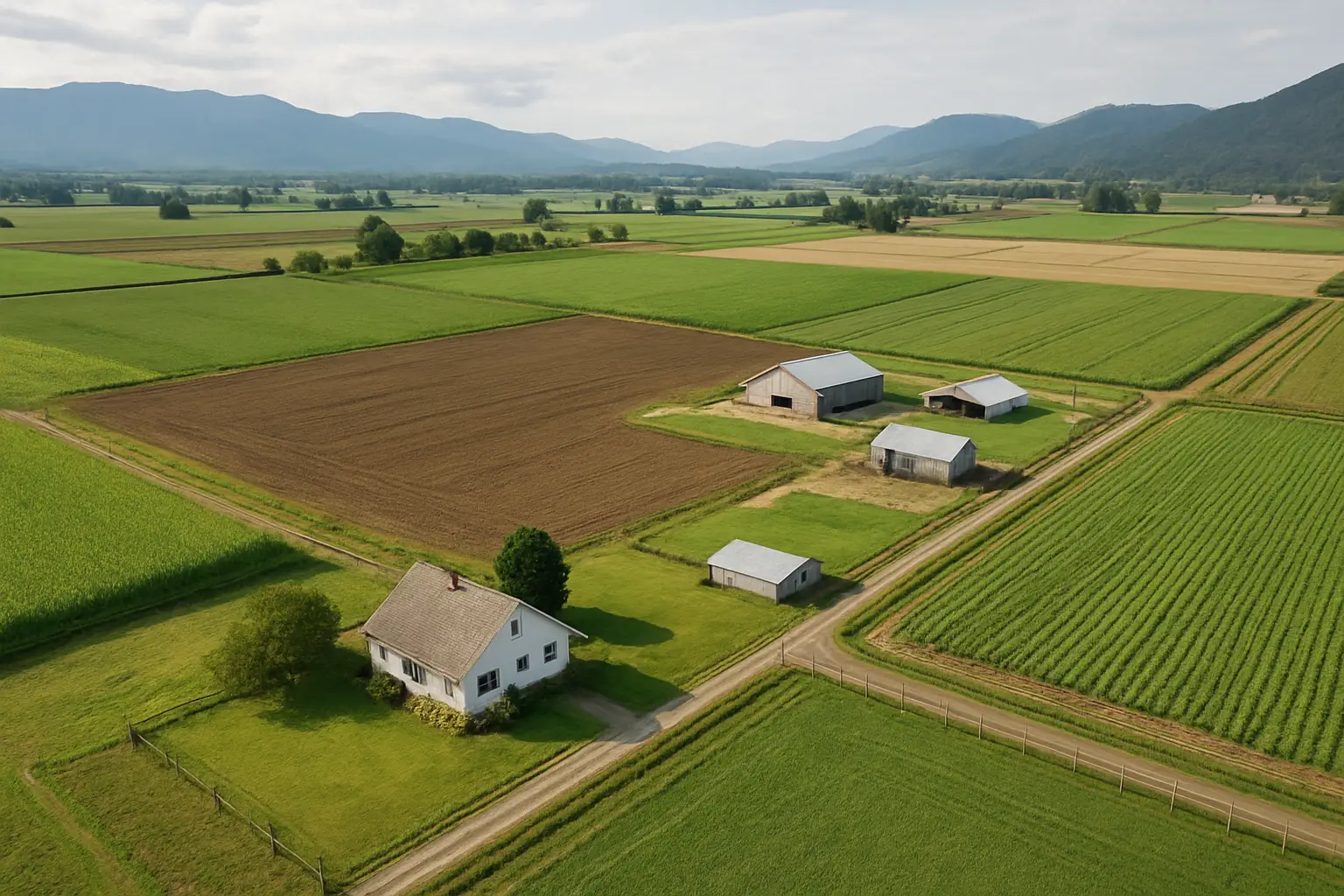
The most important point for an acreage buyer is that farm class describes qualifying use and assessment treatment—it does not simply describe what the property looks like.
A five-acre property with a barn is not automatically farm class.
A ten-acre property in the ALR is not automatically farm class.
A property marketed as a “hobby farm” is not automatically farm class.
Even a property that currently has farm classification cannot necessarily be assumed to retain the same classification after ownership or land use changes.
Farm Class Is a Property-Assessment Classification
BC Assessment determines property classification for assessment purposes.
For qualifying farm land, the land is valued according to its farm use under the applicable assessment framework rather than simply being assessed like ordinary residential land.
This is one reason buyers may notice a significant difference between an acreage's market price and the assessed value assigned to farm-classified portions of the property.
But that does not mean you can look at the current owner's tax bill and assume your future property taxes will remain the same.
Why Farm Classification Can Affect Property Taxes
Property taxes are based on several factors, including taxable assessed values, property classifications and the applicable tax rates and levies.
Because qualifying farm land receives specific assessment treatment, farm classification can affect the taxable value used when property taxes are calculated.
This can make farm classification financially significant to an acreage owner.
However, it is important to separate two ideas:
Current Property Taxes
These reflect the property's existing assessment, classifications and applicable tax rates.
Your Future Property Taxes
These can change with future assessments, tax rates, property uses, classification decisions, improvements and other factors.
For that reason, a listing's current annual tax amount should be treated as historical property information, not a guaranteed future ownership cost.
Farm Class Does Not Necessarily Apply to the Entire Property
This is an important detail that acreage buyers can easily miss.
A rural property can have more than one assessment classification.
For example, qualifying agricultural land may be farm class while other portions of the property are assessed differently based on their use.
The residence and certain improvements do not simply become “farm land” because they sit on a farm-classified parcel.
BC Assessment can use a split classification when different portions of a property have different uses.
Why This Matters to Buyers
Imagine viewing a Fraser Valley acreage containing:
a farmhouse;
five acres of berry production;
a large detached shop;
landscaped residential grounds;
an equipment building; and
additional unused land.
You should not assume that every component receives identical assessment treatment.
Instead, review the BC Assessment information for the actual parcel and ask what portions are currently classified as farm and what portions are classified differently.
Buying a Farm-Classified Acreage Does Not Automatically Preserve Farm Status
This is probably the most important point in this article.
If you purchase a property that is currently classified as farm, do not assume the classification simply transfers permanently with the title.
BC Assessment's current guidance says that when someone purchases property already classified as farm and intends to continue farming, the new owner is required to submit a General Application for Farm Classification.
The property must also continue meeting the applicable farm-class requirements.
That means a buyer should investigate farm status before relying on it in an ownership budget.
Ask Before You Make an Offer
If a listing says:
“Property has farm status.”
Your next questions should be:
What part of the property currently has farm classification?
What agricultural activity supports that classification?
Who is currently operating the farm?
Will that activity continue after completion?
Is the land owner-operated or leased to another farmer?
What documentation supports the current classification?
What would I need to do as the new owner?
Would my intended use meet current BC Assessment requirements?
BC Assessment—not the seller, listing description or REALTOR®—determines whether the property qualifies for farm classification.
Farm Class and the ALR Are Not the Same Thing
Another common source of confusion is the relationship between BC farm class and the Agricultural Land Reserve (ALR).
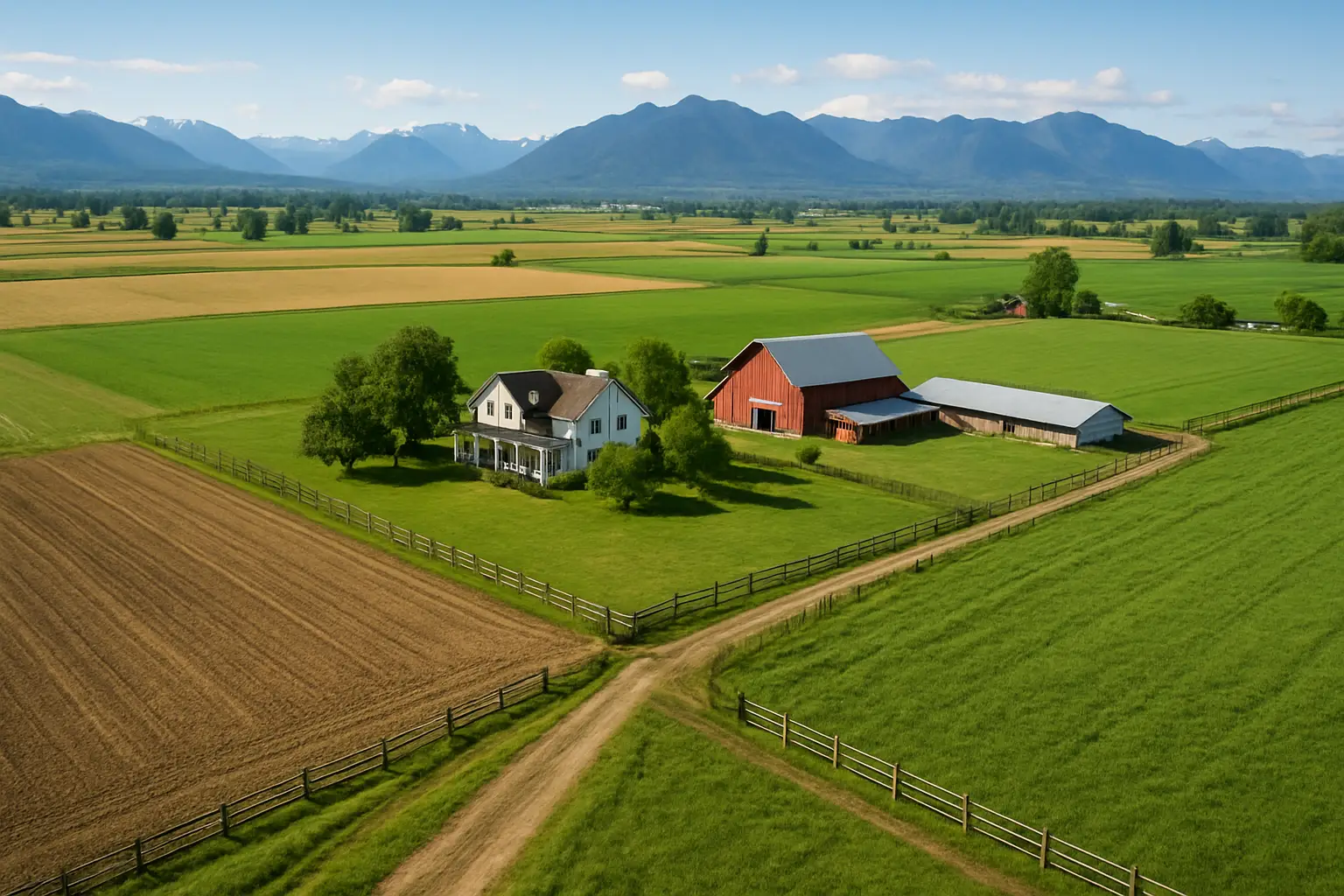
They are not interchangeable.
The ALR is a provincial land-use designation intended to protect agricultural land.
Farm classification is an assessment classification determined under separate rules.
A property can therefore require analysis of both:
What uses are permitted on the land?
How is the land classified for property-assessment purposes?
Being located in the ALR should not be treated as automatic proof that a property qualifies for farm class.
Likewise, farm classification should not be interpreted as permission to undertake every agricultural, residential, commercial or development use you may have in mind.
Why This Matters in the Fraser Valley
The distinction is particularly relevant in the Fraser Valley because acreage properties can range from rural residential estates to highly productive agricultural operations.
Areas around Abbotsford and Chilliwack include some of British Columbia's most active agricultural land, but individual properties still vary enormously.
Abbotsford Acreages
Acreages around Bradner, Matsqui, Sumas Prairie and other parts of Abbotsford may include:
berry production;
nurseries;
livestock;
poultry-related agricultural uses;
greenhouses;
equestrian facilities;
leased agricultural land;
rural residences; and
combinations of residential and agricultural uses.
If you are comparing properties in this market, browse current Abbotsford acreage listings and look beyond the advertised acreage size.
Ask what the land is actually being used for today.
Chilliwack Acreages
In Chilliwack, areas such as Greendale, Yarrow and other rural communities can also include a mix of working agricultural properties and lifestyle acreages.
Two neighbouring five-acre properties may have very different assessment histories if one supports qualifying agricultural production and the other is primarily residential.
When researching the area, compare current Chilliwack acreage listings with the BC Assessment record and the actual use of each property.
A Barn and Pasture Do Not Automatically Create Farm Class
The appearance of a property can be misleading.
Acreage buyers often see:
fenced fields;
a barn;
chickens;
horses;
a greenhouse;
fruit trees;
vegetable gardens; or
agricultural equipment.
These features may suggest a rural or farming lifestyle, but they do not by themselves tell you whether the property satisfies BC Assessment's current requirements for farm classification.
Farm-class eligibility is based on the applicable regulated requirements, including qualifying agricultural activity and other required conditions.
“Hobby Farm” Is Not a Tax Classification
The term hobby farm is widely used in real estate marketing.
It can describe a property suitable for animals, gardening, small-scale agriculture or simply enjoying a rural lifestyle.
But “hobby farm” is not a substitute for confirming the property's official BC Assessment classification.
If farm status matters to your purchasing decision, verify it independently.
What If the Current Owner Leases the Land to a Farmer?
This is especially relevant in the Fraser Valley.
Some acreage owners do not personally operate the agricultural portion of their property. Instead, land may be leased to a farmer who uses it as part of a larger agricultural operation.
Under BC Assessment's current guidance, leased land may qualify for farm classification when the applicable requirements are satisfied.
However, that does not mean any informal arrangement automatically protects farm status.
The arrangement, agricultural use, lease documentation and qualifying farm operation can all matter.
Questions for a Property With Leased Farmland
If the seller tells you that another farmer uses the land, ask:
Is there a written agricultural lease?
Who is the farmer?
Which portion of the property is leased?
What is being produced?
When does the lease expire?
Is the lease expected to continue after the property is sold?
Has the lease been used to support the current farm classification?
What information would BC Assessment require from a new owner?
Do not assume that continuing to “let the neighbour use the field” automatically produces the same assessment result.
Confirm the specific situation with BC Assessment.
What Happens If Farming Stops?
A property that currently qualifies for farm class must continue meeting the applicable requirements to maintain that classification.
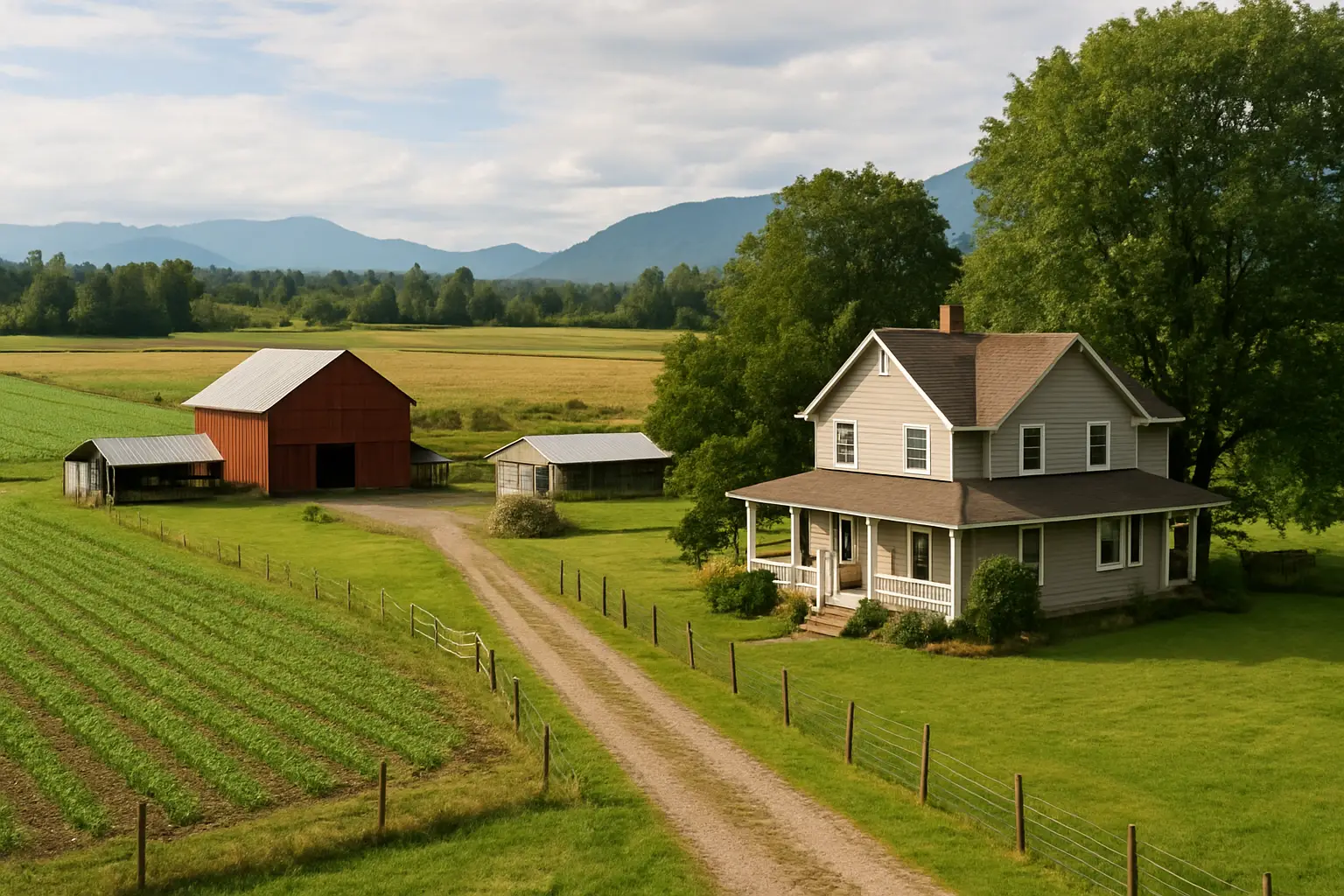
If the qualifying agricultural activity stops or required information is not provided, BC Assessment may change the property's classification.
That can also change how the land is valued for assessment purposes.
For a buyer, this creates an important budgeting question.
Suppose you buy an acreage that has historically been an active farm, but your plan is to use it primarily as a large rural residence.
Your future property-assessment situation may not be identical to the seller's.
That possibility should be researched before you rely on the seller's existing tax bill.
Do Not Buy an Acreage Just to Get “Farm Tax”
Occasionally buyers begin with the idea:
“If I buy enough land and put a few animals on it, I can get farm status and lower my taxes.”
That is too simplistic.
Farm classification has regulated requirements, and BC Assessment may require supporting information about the agricultural operation.
Instead of designing a property purchase around a tax assumption, start with your intended use.
Ask yourself:
Do I genuinely intend to farm?
What type of agricultural activity am I considering?
Is it permitted on this property?
Is the land suitable for that activity?
What infrastructure would be required?
Would I operate the farm or lease land to a farmer?
What farm-class requirements apply to that situation?
What records would need to be maintained?
Then discuss the classification question directly with BC Assessment.
What Should Buyers Verify on the BC Assessment Record?
Before purchasing a Fraser Valley acreage, review the property's current assessment information.
Pay attention to more than the headline assessed value.
Depending on the property, useful questions include:
1. What Is the Current Property Classification?
Determine whether farm class appears on the property and whether other classifications are also present.
2. Is the Property Split-Classified?
A property can contain different uses and classifications.
Understanding this helps prevent the assumption that the entire acreage receives farm assessment treatment.
3. What Is the Assessed Land Value?
Compare the assessment information with the property's actual asking price and current use.
A major difference between assessed farm-land value and market price is not necessarily an error; farm-classified land is subject to specific valuation rules.
4. What Improvements Are Included?
A farmhouse, barn, shop, greenhouse and other structures may not all receive the same assessment treatment as farm-classified land.
5. What Does the Current Owner's Farm Operation Look Like?
The assessment record alone does not tell you everything about how the current owner qualifies.
Request appropriate supporting information through your REALTOR® and verify the classification requirements independently.
Questions to Ask BC Assessment Before Relying on Farm Status
If farm classification is important to your purchase, contact BC Assessment before assuming the existing tax treatment will continue.
A useful conversation could include these questions:
About the Existing Classification
Is this property currently classified in whole or in part as farm?
Which portions of the parcel currently receive farm classification?
Are any portions classified residential or otherwise?
Is there anything about the current classification a prospective buyer should understand?
About Change of Ownership
What must a new owner do after purchasing a currently farm-classified property?
What application is required?
When must it be submitted?
What supporting information may be requested?
About Your Intended Use
Would the agricultural activity I am considering potentially fall within a qualifying agricultural use?
What current requirements should I review before relying on farm classification?
What records should I maintain?
Are there special considerations if another farmer leases and farms the land?
About Future Changes
What can cause farm classification to be removed?
How could the assessment change if qualifying agricultural activity stops?
Where can I find the most current farm-class rules, forms and guidance?
These questions are more useful than asking someone to predict your exact future property-tax bill.
Do Not Rely on an Old Property Tax Number
Real estate listings often display the previous year's property taxes.
That number is useful historical information, but it should not become the foundation of your long-term ownership budget.
Property taxes can change because of:
new annual assessments;
changes in property classification;
changes in agricultural use;
changes to taxable values;
new construction or improvements;
applicable exemptions;
municipal or rural tax rates;
regional levies; and
other taxing-authority decisions.
The safest approach is to treat current taxes as what was charged under the property's previous circumstances, not a promise about what you will pay.
A Simple Pre-Purchase Farm-Class Checklist
Before relying on farm status when evaluating an acreage, work through the following list.
Property
Confirm the acreage size.
Review the current BC Assessment record.
Determine whether the property has farm classification.
Determine whether classification applies to all or only part of the land.
Identify residential and other property components.
Agricultural Use
Find out what agricultural activity currently takes place.
Determine who operates the farm.
Confirm whether farmland is leased.
Ask for relevant lease information where applicable.
Determine whether farming will continue after completion.
Your Plans
Decide how you intend to use the property.
Do not assume your intended activity will qualify.
Verify land-use and zoning considerations separately.
Check whether ALR rules apply.
Discuss your intended agricultural activity with BC Assessment.
Farm Classification
Ask what application a new owner must submit.
Confirm the current submission deadline.
Ask what evidence may be required.
Verify the current qualifying-use and income rules directly with BC Assessment.
Do not rely on thresholds copied from an old blog, forum or listing.
Property Taxes
Review the current tax amount as historical information.
Do not assume the seller's tax treatment will continue unchanged.
Ask the appropriate taxing authority how property taxes are calculated in that location.
Obtain professional tax advice when your purchase decision depends on a specific tax outcome.
Why We Have Not Published a “How Much Farming Do I Need?” Formula Here
BC Assessment publishes specific rules governing farm classification, including requirements relating to agricultural production and farm income.
Those rules can change.
For that reason, this article intentionally does not turn the current criteria into a simplified formula such as:
“Own X acres, sell Y dollars of produce, and you will qualify.”
Real properties and farm operations can involve additional considerations, and relying on an outdated threshold can lead to poor assumptions before a significant real estate purchase.
For the latest requirements, application forms and deadlines, use the official BC Assessment farm-classification resources.
Farm Class Should Be One Part of Acreage Due Diligence
Property taxes matter, but they should not overshadow the rest of your acreage research.
Before purchasing rural property in the Fraser Valley, you may also need to investigate:
zoning;
Agricultural Land Reserve status;
permitted uses;
wells and water supply;
septic systems;
drainage;
flood considerations;
access;
easements;
outbuildings;
building permits;
additional dwellings;
agricultural leases; and
the condition of the residence and farm infrastructure.
The right acreage should fit the way you actually intend to use the property—not only an expected tax classification.
Frequently Asked Questions About BC Farm Class and Acreage
What is farm class in BC?
Farm classification is a property-assessment classification administered by BC Assessment under provincial legislation. Land must satisfy applicable requirements to receive and maintain farm classification.
Is farm class the same as farm status?
“Farm status” is commonly used conversationally to describe farm classification, but buyers should verify the property's official classification directly through BC Assessment rather than relying on marketing terminology.
Does buying an acreage automatically qualify for farm class?
No.
Acreage size alone does not establish farm classification. The property must meet the applicable BC Assessment requirements.
Does ALR land automatically get farm classification?
No.
Being located within the Agricultural Land Reserve and receiving farm classification are separate matters governed by different frameworks.
If a property already has farm class, will I keep it after buying?
Do not assume so.
BC Assessment currently instructs purchasers of farm-classified property who intend to continue farming to submit a General Application for Farm Classification. The property must continue meeting the applicable requirements.
Can only part of an acreage have farm classification?
Yes.
BC Assessment can apply different classifications to different portions of a property based on their use.
Does the farmhouse receive the same treatment as farm land?
Not necessarily.
Land, residences and other improvements can have different assessment classifications or tax treatment. Review the actual BC Assessment record rather than assuming the entire property is Class 9 Farm.
Can leased farmland qualify for farm class?
It may, provided the applicable BC Assessment requirements are met. If an acreage relies on farming by a tenant or neighbouring farmer, investigate the lease and classification situation before assuming it will continue after a sale.
Does farm classification guarantee lower property taxes?
No specific tax outcome should be assumed.
Farm classification can affect the assessed value and tax treatment of qualifying land, but the actual tax bill depends on the property's classifications, taxable values, applicable tax rates, exemptions and other factors.
Can I guarantee farm class by starting a small hobby farm?
No.
A rural lifestyle activity does not automatically qualify land for farm classification. Review the current qualifying agricultural-use and other requirements with BC Assessment.
Research Farm Status Before You Rely on It
Farm classification can be an important part of owning agricultural acreage in the Fraser Valley, but it should be researched carefully.
The key points are straightforward:
Farm class is not automatic because a property is large.
Farm class is not automatic because a property is in the ALR.
Farm class is not guaranteed because a listing calls the property a farm.
The seller's current farm classification does not guarantee identical treatment for the next owner.
And most importantly:
Do not base an acreage purchase on an expected property-tax benefit until you have verified the circumstances directly with BC Assessment.
Use this article as your pre-purchase question list, confirm the current classification and rules with BC Assessment, and then explore acreage properties that fit the way you actually intend to use the land.
Browse current Fraser Valley acreage listings, compare Abbotsford acreage for sale, or explore Chilliwack acreage listings to begin comparing rural properties across the Valley.
Official Resources
For current farm-classification requirements, applications and guidance, consult BC Assessment directly.
For current British Columbia property-tax information, consult the Province of British Columbia tax resources.
Always verify the rules that are in effect for the applicable assessment and taxation year before relying on farm classification in a purchase decision.
 The data relating to real estate on this website comes in part from the MLS® Reciprocity program of either the Greater Vancouver REALTORS® (GVR), the Fraser Valley Real Estate Board (FVREB) or the Chilliwack and District Real Estate Board (CADREB). Real estate listings held by participating real estate firms are marked with the MLS® logo and detailed information about the listing includes the name of the listing agent. This representation is based in whole or part on data generated by either the GVR, the FVREB or the CADREB which assumes no responsibility for its accuracy. The materials contained on this page may not be reproduced without the express written consent of either the GVR, the FVREB or the CADREB.