.png)

Buying a rural home in the Fraser Valley can mean taking responsibility for something many city homeowners rarely think about: their own drinking-water supply.
If the property relies on a private well instead of a municipal water system, checking that water comes out of the taps is not enough. Buyers should understand the well's water quality, available flow or yield, construction, maintenance history, treatment equipment and records before deciding whether they are comfortable removing purchase conditions.
Fraser Health specifically advises buyers that private wells receive limited regulatory oversight and that the homeowner is responsible for making sure the water is safe for drinking, cooking and household sanitation. It also recommends having a qualified professional inspect the well before purchase.
If you are still comparing rural properties, explore current Fraser Valley acreage listings. Once you have identified a property you may actually purchase, well due diligence should become property-specific.
What Should You Check When Buying a Fraser Valley Home With a Well?
A useful way to approach a private well is to answer several separate questions:
Is the water currently safe to drink?
Does the well produce enough water for the property's expected use?
How was the well constructed?
Where is the well located?
Are official or historical well records available?
Has the well or pump required repairs?
Does the property use water-treatment equipment?
Has water quality changed over time?
Are there nearby potential sources of contamination?
Could the well's performance vary seasonally?
One favourable result does not automatically answer all the others.
For example, a satisfactory water-quality sample tells you something about the water tested at that point in time. It does not, by itself, establish how much water the well can sustainably supply.
Similarly, a strong flow result does not prove that the water is suitable for drinking.
1. Have the Well Water Tested Before You Buy
Water quality is one of the first issues buyers should investigate.
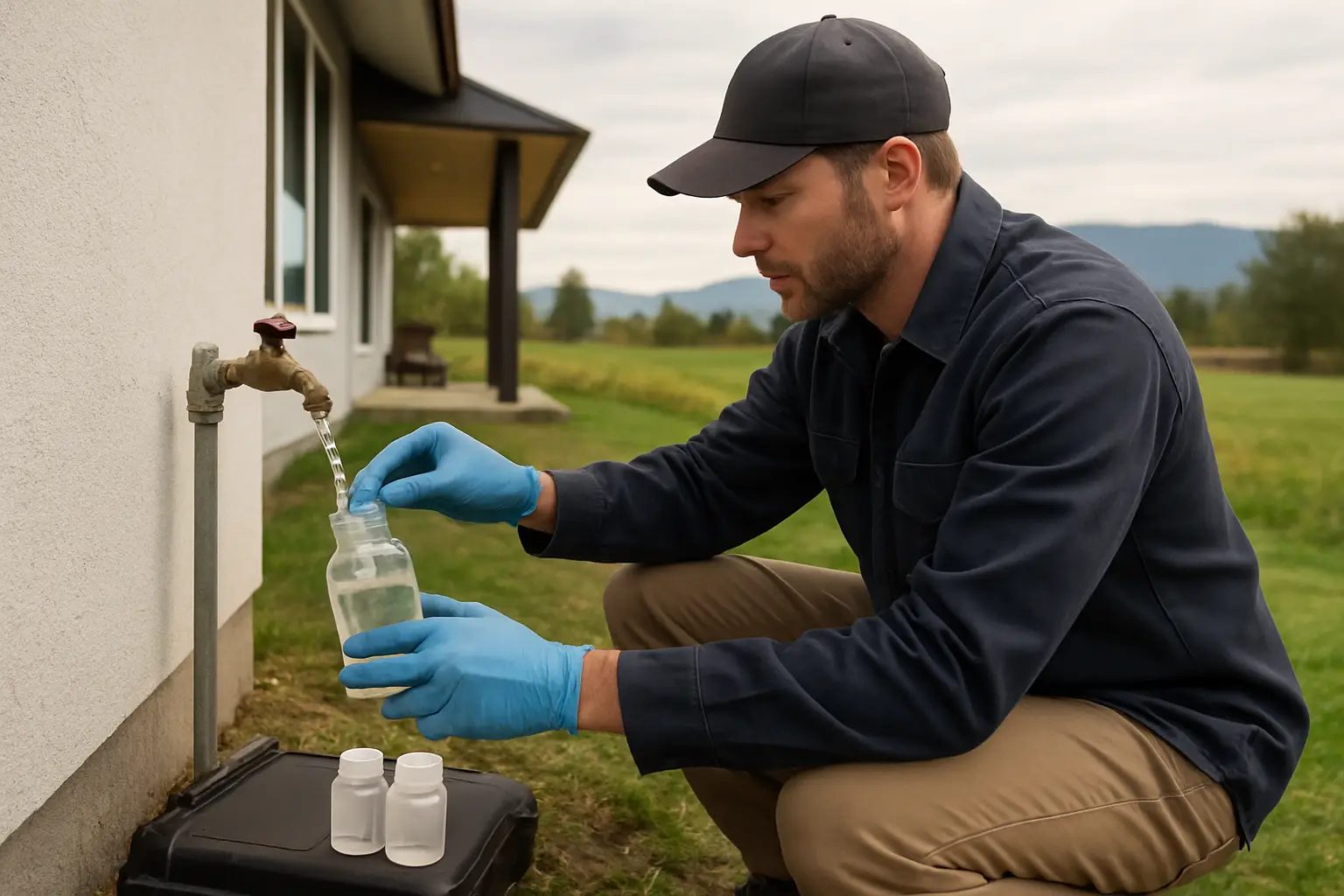
Fraser Health advises buyers to have well water tested through an appropriate laboratory and specifically recommends contacting the laboratory about a potability test for drinking water. It notes that laboratories often provide sampling kits and instructions, while buyers can also arrange for a qualified professional to collect samples.
What should well water be tested for?
HealthLinkBC separates private-well testing into two broad categories:
Bacteriological testing
Chemical testing
HealthLinkBC recommends bacteriological testing of private wells at least annually and when there is a noticeable change in water clarity, colour or taste. Two organisms commonly considered in bacteriological testing are total coliforms and E. coli.
Chemical testing addresses a different set of potential contaminants and water-quality characteristics.
For a purchase, ask the laboratory or an appropriate water professional what testing is suitable for the particular property rather than assuming that one basic test covers every possible issue.
Why buyers should obtain a current test
A seller may have old water-test results, and those records can be useful background.
But historical results do not necessarily tell you what is happening today.
Water quality can be influenced by well condition, surrounding land uses, environmental events and other factors. HealthLinkBC notes that private well owners are responsible for testing their own water and recommends regular testing.
For purchase due diligence, consider requesting recent testing that reflects the water supply you would actually be taking ownership of.
2. Understand the Difference Between Water Quality and Well Flow
A private well must do more than provide acceptable water quality.
It also needs to supply enough water for the household's needs.
This is where buyers should distinguish between water quality testing and well-flow or yield testing.
B.C.'s Groundwater Protection Regulation defines a flow test as either a pumping test or a well-yield test. A well-yield test provides an approximate estimate of the well's capacity to produce groundwater, while a pumping test can provide more detailed information about well performance and aquifer characteristics.
Why flow matters to a homebuyer
Imagine a rural house with:
multiple bathrooms;
several occupants;
laundry;
extensive gardens;
livestock;
an irrigation system; or
other significant water demands.
The relevant question is not simply:
Does the well work?
It is:
Can this water system reasonably support how we intend to use this property?
Fraser Health advises buyers that a well driller's log may contain information about water production at the time the well was constructed and notes that a qualified professional can perform a well-yield test.
Do not rely on a seller's description such as "we have never run out of water" as the only evidence available.
That statement may be useful context, but the seller's household size and water use may be very different from yours.
3. Ask for the Well Driller's Log or Well Construction Record
One of the most useful pieces of information may be the property's well construction record.
Fraser Health notes that a well driller's log can provide information such as:
well depth;
soil conditions;
water production; and
construction materials.
B.C. also maintains the Groundwater Wells and Aquifers database, commonly referred to as GWELLS, where available well records can be searched.
Buyers can review the provincial resource here:
Search B.C. Groundwater Wells and Aquifers
Keep in mind that finding—or not finding—a record online should not be treated as a complete inspection of the property.
The physical well, the seller's documentation and professional investigation still matter.
4. Ask for All Available Well and Flow-Test Records
Do not stop at the original drilling information.
Ask the seller what other documentation exists.
Useful records may include:
well construction reports;
well identification information;
previous flow-test reports;
pump replacement records;
well servicing invoices;
water-treatment installation records;
filter or treatment maintenance records;
historic water-quality results;
disinfection records; and
documentation of repairs or alterations.
This is more than a good organizational habit.
Under B.C.'s Groundwater Protection Regulation, well owners must retain certain well records, including required well identification and construction reports and reports from flow tests. When ownership or an interest in the well is transferred, records in the owner's custody or control that are covered by the regulation must be transferred to the new owner.
Missing documentation does not automatically mean the property should be rejected. Older rural properties can have incomplete records.
It does mean buyers should recognize the information gap and determine what additional investigation is appropriate.
5. Inspect the Physical Condition of the Well
A well can be present and functioning while still raising questions about its construction or condition.
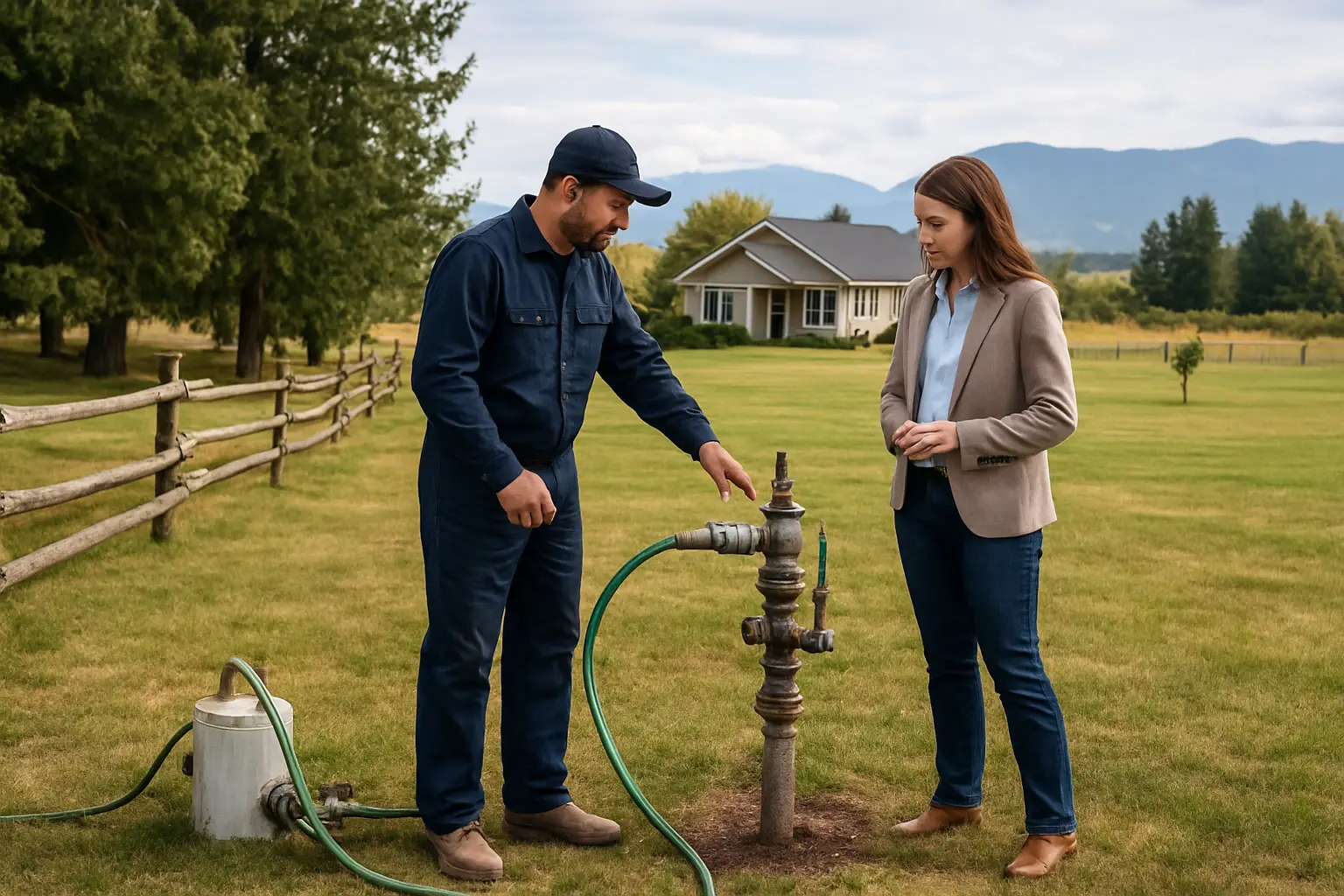
Fraser Health advises buyers to examine whether the well appears properly constructed. Its guidance includes checking that the casing extends above ground, that there are no visible cracks or holes, that the cap is secure and watertight, and that surrounding ground directs surface water away rather than allowing it to pond around the well.
B.C.'s current Groundwater Protection Regulation similarly contains requirements dealing with maintaining the wellhead, preventing foreign matter from entering a well, maintaining drainage and keeping wells in good operating condition.
A buyer does not need to become a well technician.
The better approach is to recognize visible issues that deserve professional attention.
6. Find Out Where the Well Is Located
On acreage, location matters.
Ask exactly where the wellhead is and confirm that you can identify it physically.
This becomes particularly important when a rural property also contains:
a septic system;
barns;
livestock areas;
agricultural activity;
fuel or chemical storage;
drainage areas; or
neighbouring rural uses.
Fraser Health advises buyers to consider possible contamination sources and gives a general guideline that contamination sources should be at least 100 feet (30 metres) from the well, specifically mentioning septic fields and livestock pens as examples to investigate.
That does not mean a buyer should personally determine whether the property's siting complies with every applicable requirement.
It means the well's surroundings deserve attention.
If the relationship between the well, septic system and other property features is unclear, raise the issue with the appropriate professionals during your due-diligence period.
7. Ask About the Age and Condition of the Pump
The well itself is only one part of getting water into a house.
The property may also rely on components such as:
a submersible or other well pump;
pressure tank;
pressure controls;
electrical components;
pipes;
storage tanks; and
treatment equipment.
Ask:
How old is the pump?
A pump does not necessarily date from the same year as the well.
Has it ever been replaced?
If yes, ask whether invoices or service records are available.
Have there been pressure problems?
Low pressure can have several possible causes, so it should not automatically be blamed on insufficient groundwater.
Has the well ever stopped producing water?
If the answer is yes, understand the circumstances and what was done afterward.
The goal is to build a history of how the water-supply system has actually performed.
8. Understand Any Water-Treatment Equipment
Some Fraser Valley rural properties use treatment equipment between the well and the household taps.
Depending on the property, you might encounter equipment intended to address particular water-quality characteristics or contaminants.
Rather than viewing treatment equipment automatically as either positive or negative, find out why it is there.
Ask the seller:
What does the treatment system address?
When was it installed?
Who installed it?
How often is it serviced?
What consumables or filters need replacement?
Are service records available?
What does normal annual maintenance involve?
Was your water sample taken before or after treatment?
That last question can be particularly useful.
If a property relies on treatment to achieve its current water quality, a buyer should understand both the untreated water and the equipment that needs to remain operational.
Fraser Health warns that wells with poor water quality can be expensive to treat, which is another reason to understand the existing system before purchasing.
9. Consider Seasonal Water Supply
One day's performance may not tell the complete story of a private well.
Fraser Health notes that shallow wells can be more vulnerable to seasonal variations in both water quantity and quality.
That makes historical questions particularly useful.
Ask the seller:
Has the well ever run low during summer?
Has water pressure changed seasonally?
Has the household ever needed water delivered?
Are gardens or livestock supplied from the same well?
Have nearby owners experienced seasonal water shortages?
Has the well's water quality changed after heavy rain, flooding or other events?
Fraser Health also suggests talking with neighbours about local well quantity and quality.
Neighbour comments should not replace testing, but they can provide useful local context.
10. Check Whether the Well Is Registered
Domestic groundwater users in B.C. generally do not need a water licence for domestic use, but the Province strongly encourages domestic well owners to register their wells. Registration creates a record of the well and helps ensure that the water use is considered in relation to other groundwater decisions.
When reviewing a rural property, determine whether the well appears in the provincial GWELLS database.
If it does, compare the record with what you see and what the seller has provided.
If it does not, investigate further rather than assuming why.
The Province provides information about well records and registration here:
B.C. Well Records and Registration
11. Don't Forget the Septic System
Many Fraser Valley acreages with private wells also rely on private septic systems.
The two systems require separate inspections, but their locations can matter to each other.
Fraser Health specifically tells well buyers to consider nearby septic fields as a potential source of contamination and recommends professional septic inspection where a property uses an onsite system.
Do not treat a satisfactory septic inspection as proof of good well water, or a satisfactory water test as proof that the septic system is functioning correctly.
Each deserves its own due diligence.
12. Make Water Due Diligence Part of Your Offer Conditions
The best time to discover uncertainty about a property's water supply is before subjects or conditions are removed.
The Valley Life's Fraser Valley home-buying process identifies due diligence, inspections and document review as part of the process before finalizing a purchase.
For a home with a private well, your due-diligence plan may include sufficient time to:
obtain well records;
locate and visually assess the well;
arrange appropriate water-quality testing;
obtain a flow or yield assessment when appropriate;
review pump and treatment equipment;
investigate maintenance and repair history;
review the septic system separately;
obtain specialist advice when concerns appear; and
understand the findings before deciding whether to remove subjects.
The exact wording and scope of purchase conditions depend on the property and transaction. Your Realtor and, where appropriate, legal or technical professionals can help determine what is suitable.
What If the Well Test Finds a Problem?
A problem does not automatically tell you what your next decision should be.
First determine what the problem actually is.
A water-quality concern is different from a supply concern.
A maintenance issue is different from a failing pump.
A missing record is different from a defective well.
If testing or inspection reveals something unexpected, useful next questions include:
What caused the result?
Should the water be retested?
Is treatment appropriate?
Does existing treatment equipment address the issue?
Does the well require repair?
Is additional professional assessment needed?
What is the expected cost?
Will ongoing maintenance be required?
Does the finding change how we intend to use the property?
This information can then become part of the buyer's overall assessment of the property and offer.
Fraser Valley Private Well Buyer Checklist
Before removing well-related subjects, consider whether you can answer the following.
Water quality
Has a current water sample been tested by an appropriate laboratory?
Do we understand what was included in the test?
Do we understand the results?
Was the sample taken before or after treatment equipment?
Is additional chemical testing appropriate?
Water supply
Do we know the well's approximate production or yield?
Is there a recent flow or yield test?
Does the supply appear appropriate for our intended household and property use?
Is there evidence of seasonal water shortages?
Records
Is there a well construction report or driller's log?
Does the well appear in the B.C. GWELLS database?
Are previous flow-test reports available?
Are pump repair or replacement records available?
Are historic water-test results available?
Physical system
Has the wellhead been located?
Is the casing visibly damaged?
Is the cap secure?
Does surface water appear to drain away from the well?
Has a qualified professional identified any concerns?
Treatment and equipment
Does the property have water-treatment equipment?
Do we know what it treats?
Are maintenance records available?
Do we understand ongoing servicing and operating requirements?
Do we know the condition and age of the pump and pressure equipment?
Property surroundings
Where is the septic system?
Are there livestock areas nearby?
Are there other possible contamination sources?
Could neighbouring land uses affect the well?
Are there site-specific issues that warrant professional review?
Frequently Asked Questions About Buying a Home With a Well in the Fraser Valley
Should I test well water before buying a Fraser Valley acreage?
Yes, water-quality testing is an important part of private-well due diligence. Fraser Health recommends having drinking water tested through an appropriate laboratory before purchase rather than simply assuming that clear-looking water is safe.
What is a well-flow test in BC?
Under B.C.'s Groundwater Protection Regulation, a flow test can include a pumping test or well-yield test. These tests provide information about a well's ability to produce groundwater, with pumping tests capable of providing more detailed information about well and aquifer performance.
Is a well-water test the same as a well inspection?
No. Water testing evaluates the sampled water for specified parameters. A broader well assessment can consider the well's physical condition, construction, equipment, records and ability to supply water.
Where can I find well records in British Columbia?
The Province maintains the Groundwater Wells and Aquifers database, which can be searched for available well information. B.C. also provides a dedicated well-records and registration resource.
What records should the seller have for a private well?
Depending on the well's history and applicable requirements, records can include well construction or identification reports and flow-test reports. B.C.'s Groundwater Protection Regulation includes requirements for retaining specified well records and transferring applicable records to a new owner.
Does a domestic well need a water licence in BC?
The Province states that groundwater used for domestic purposes does not require a water licence, although domestic owners are strongly encouraged to register their wells. Different rules can apply when groundwater is used for non-domestic purposes.
Should I test the well if the seller says the water is excellent?
Yes. A seller's experience is useful background, but it is not a substitute for current testing and property-specific due diligence.
Can a well have good water quality but poor flow?
Yes. Water quality and water quantity are separate considerations. A laboratory test can provide information about the sample's quality, while a flow or yield assessment helps evaluate how much groundwater the well can produce.
Buying a Fraser Valley Property With a Private Well?
A private well should not automatically discourage you from considering a rural property. Thousands of rural homeowners depend on groundwater.
What matters is understanding the system you are buying.
Before removing conditions, know what is in the water, whether the well can meet your needs, how the system has been maintained and what records support its history.
Start by exploring current Fraser Valley acreage listings.
For broader guidance, review the Fraser Valley home-buying process.
When you find a property and want help organizing property-specific due diligence before committing, contact a Fraser Valley Realtor with The Valley Life.
Explore Fraser Valley acreages and get property-specific guidance before removing conditions.
 The data relating to real estate on this website comes in part from the MLS® Reciprocity program of either the Greater Vancouver REALTORS® (GVR), the Fraser Valley Real Estate Board (FVREB) or the Chilliwack and District Real Estate Board (CADREB). Real estate listings held by participating real estate firms are marked with the MLS® logo and detailed information about the listing includes the name of the listing agent. This representation is based in whole or part on data generated by either the GVR, the FVREB or the CADREB which assumes no responsibility for its accuracy. The materials contained on this page may not be reproduced without the express written consent of either the GVR, the FVREB or the CADREB.