.png)

A Langley acreage can look horse-ready within the first few minutes of a showing. There may be a barn, several fenced paddocks, a gravel drive and enough green space to picture your horses settling in.
But buying an equestrian property in Langley requires a different level of due diligence than buying a conventional home.
The question is not simply whether the property has enough acreage. You need to know whether the land, buildings, access, water, drainage and permitted uses actually support the way you plan to keep and manage your horses.
A property that works beautifully for two retired horses may not work for a family with several competition horses, a large trailer, separate turnout requirements or future plans for an arena.
Before making an offer, work through these 12 checks.
If you are still looking for suitable properties, start by reviewing current Langley acreage listings. Buyers considering a wider search area can also compare Fraser Valley acreage listings.
Is a Langley Acreage With a Barn Automatically a Horse Property?
No.
A barn, fencing, pasture or even horses currently living on a property does not automatically confirm that every existing or future equestrian use is permitted.
That distinction matters because rural Langley properties can have different zoning, site conditions and land-use restrictions. Some parcels may also be within British Columbia's Agricultural Land Reserve.
Before relying on descriptions such as “horse property,” “equestrian acreage” or “hobby farm,” verify the specific property and the specific use you have in mind.
Keeping your own horses can raise different questions from operating boarding, training, breeding, lessons or other commercial equestrian activities.
1. Confirm the Zoning and Your Intended Horse Use
Start with your actual plan for the property.
Do you want to keep two personal horses? Six horses? Board horses for other owners? Run lessons? Build an arena? Employ a trainer?
Those are not necessarily the same land-use scenario.
Before making an offer, confirm the property's zoning with the Township of Langley and understand how the applicable rules affect your intended use.
Ask:
How many horses do we plan to keep?
Are they all privately owned?
Will customers, students or boarders visit the property?
Do we need an indoor or outdoor arena?
Will we eventually expand the barn?
Are there restrictions that affect buildings, livestock or commercial activity?
Do not assume that because the current owner keeps horses, your planned use will automatically be permitted.
2. Verify the Barn, Arena and Other Buildings
A good barn can add significant practical value to an equestrian acreage, but buyers should investigate more than appearance.
Ask what records are available for the barn, arena, shelters, tack rooms, workshops and other major structures.
Depending on the property and the work completed, permits or approvals may have been required.
You should also assess the physical condition of the structures.
Check the barn for:
Roof condition
Electrical service
Ventilation
Stall construction
Drainage
Water access
Aisle width
Hay and bedding storage
Tack and feed areas
Safe access to paddocks
A beautiful barn is less valuable if major improvements, repairs or compliance work will be required soon after possession.
3. Look at Usable Horse Acreage, Not Just Total Acreage
A property's advertised acreage does not tell you how much of the land will actually function as horse space.
Buildings, driveways, wooded sections, slopes, drainage areas and other features can reduce usable turnout.
For example, a five-acre property with well-designed paddocks may function better for horses than a significantly larger parcel with poor layout.
Walk the property and consider:
Number of separate paddocks
Size of each turnout area
Gate placement
Shelter
Soil and footing
Movement between barn and paddocks
Areas that may become muddy
Whether horses need to cross vehicle routes
Think about how your horses would actually move through the property every day.
4. Inspect the Fencing Carefully
Replacing equestrian fencing across several acres can become a substantial ownership cost.
Do not inspect fences only from the driveway.
Walk important sections and check the condition of posts, boards, gates and electric fencing systems.
Pay attention to:
Leaning or rotten posts
Loose boards
Exposed nails or hardware
Damaged wire
Electric fencing equipment
Gate condition
Corners
High-traffic areas near water and feeding locations
Also consider whether the existing fencing configuration suits your horses.
A setup designed for one small herd may require substantial changes if you need several separate turnout groups.
5. Evaluate Drainage During a Fraser Valley Winter
Drainage is one of the most important practical considerations when buying an equestrian acreage in Langley.
A property can look excellent during a dry summer showing while becoming difficult to manage during extended periods of rain.
Look closely at:
Paddock entrances
Gateways
Barn entrances
Low sections of pasture
Sacrifice areas
Driveway edges
Areas surrounding shelters
Building foundations
Signs of chronic mud, standing water or erosion deserve attention.
Ask the seller how the property performs during the wettest months.
If a property is a serious contender, seeing it after significant rainfall can sometimes provide more useful information than another sunny-day visit.
6. Check the Water Supply
Horses significantly change the water requirements of a rural property.
Determine where the water comes from and how it reaches the areas where you need it.
If the property uses a well, appropriate due diligence may include reviewing available records and arranging suitable professional testing.
Consider household demand together with:
Horse drinking water
Automatic waterers
Wash stalls
Paddock troughs
Barn cleaning
Irrigation
Future horse numbers
Also inspect the location of outdoor taps or hydrants.
Carrying hoses long distances every day becomes inconvenient very quickly.
7. Understand Manure Management
Manure and bedding management should be considered before buying, not after the horses arrive.
Identify where manure is currently stored and how easily that location can be accessed from the barn.
Consider the entire process:
Barn → collection → storage → removal or other permitted management.
The site should also be evaluated for drainage and runoff.
British Columbia has environmental requirements affecting agricultural by-product storage and management, so buyers should understand whether the current system is practical and appropriate for their intended number of horses.
A manure area that works for two horses may become inadequate if you plan to keep six.
8. Test Horse Trailer Access
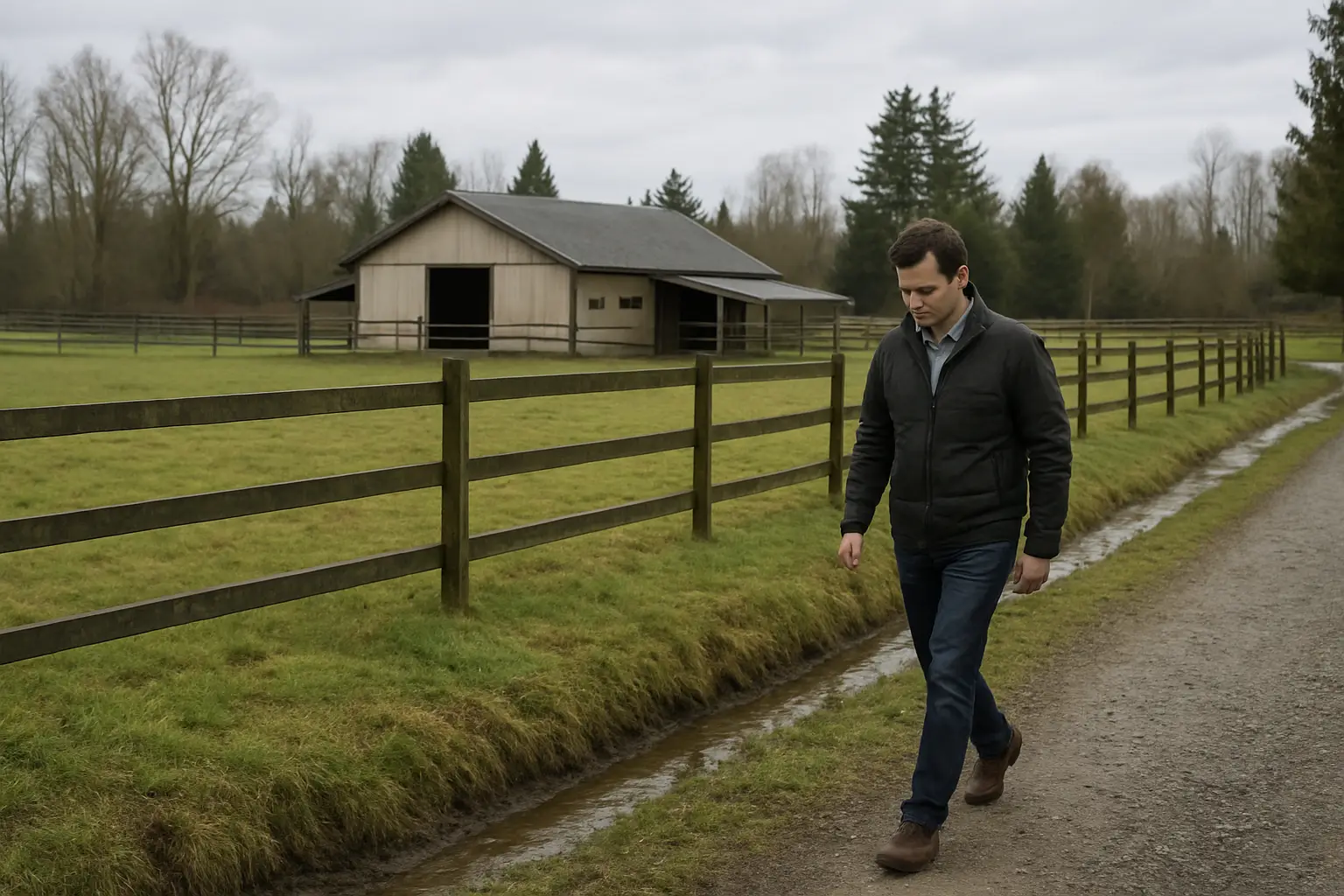
A driveway that works perfectly for a passenger vehicle may be frustrating with a loaded horse trailer.
When viewing a property, think about your actual trailer.
Check:
Entrance width
Gate width
Turning radius
Overhead branches
Driveway slope
Parking space
Trailer turnaround space
Winter access
You should ideally be able to enter, manoeuvre and leave without difficult backing.
Also consider other large vehicles.
Hay deliveries, veterinarians, farriers, manure removal services, farm equipment and emergency vehicles may all need access to the property.
9. Verify Riding Access
Campbell Valley is one of the best-known equestrian areas associated with Langley, and riding access can be a major reason buyers focus their search in South Langley.
However, “near riding trails” and “ride directly from the property” are very different things.
If trail riding is important to you, verify the actual route.
Consider:
Distance from the property
Road shoulders
Traffic
Road crossings
Designated horse access
Seasonal conditions
Whether trailering is still necessary
A Campbell Valley equestrian property may be geographically close to excellent riding but still require loading the horses into a trailer.
Never assume direct riding access from a listing description alone.
10. Confirm ALR Status
Some equestrian acreages in Langley are located within British Columbia's Agricultural Land Reserve.
The ALR is a provincial land-use zone where agriculture is prioritized.
Horse-related agricultural uses may be possible within the ALR, but buyers should not interpret that as unlimited permission to develop or operate any type of equestrian facility.
ALR status becomes particularly important if your long-term plans involve:
New barns
Arenas
Additional residences
Commercial activities
Significant fill or soil work
Subdivision
Major land alteration
Check the property's ALR status through the Agricultural Land Commission and review how both provincial and Township requirements apply to your plans.
11. Discuss Insurance Before Removing Conditions
Insurance for an equestrian property can differ from insurance for a conventional home.
The property may include barns, animals, farm equipment, riding facilities and other structures that need to be properly disclosed.
If you intend to operate any type of business activity, tell the insurer.
That might include:
Boarding
Lessons
Training
Breeding
Employees
Customers visiting the property
The goal is not simply to obtain insurance.
You want confirmation that the coverage corresponds to the way you actually intend to use the property.
12. Think About What You Will Need Five Years From Now
A horse property should work for more than your current situation.
Before buying, think about how your equestrian plans may evolve.
You may eventually want:
More horses
More paddocks
A larger barn
An outdoor arena
An indoor arena
A round pen
Additional hay storage
Equipment storage
Staff facilities
Boarders
A workshop
Additional permitted residential space
Do not buy based on the assumption that “there is enough land to add it later.”
Before relying on future expansion, investigate whether the proposed improvements are realistic under the property's zoning, ALR status, site conditions, servicing and other applicable requirements.
Why Equestrian Property Due Diligence in Langley Is Different
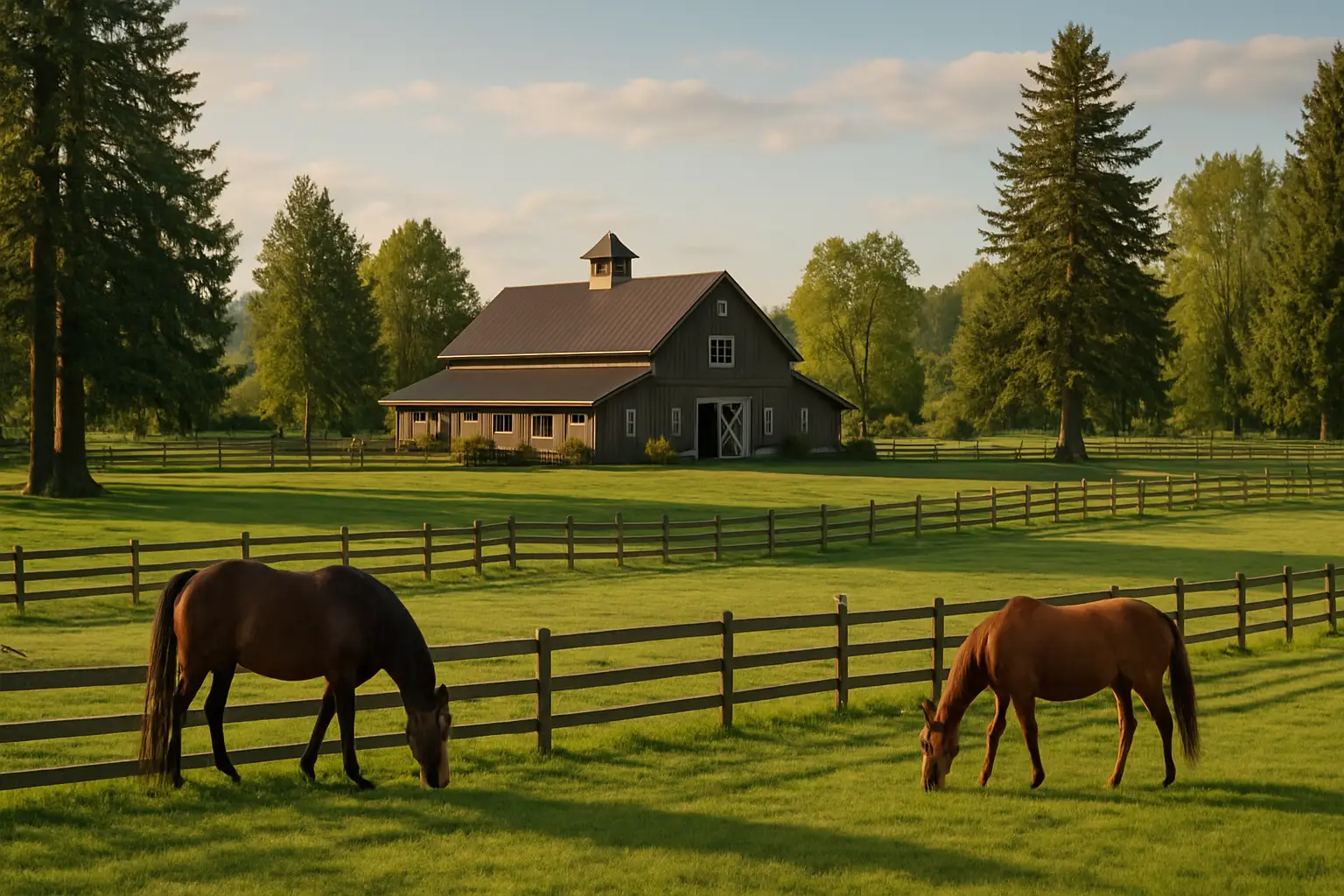
A normal residential buyer tends to focus primarily on the house.
An equestrian buyer needs to evaluate the entire operating system of the property.
Your daily life may depend just as much on the barn aisle, paddock gates, drainage, water lines and driveway as it does on the kitchen or primary bedroom.
That is why two similar-looking Langley acreages can provide completely different ownership experiences.
Campbell Valley and South Langley
Campbell Valley and surrounding South Langley areas have a strong connection to equestrian lifestyles.
Buyers may be attracted by rural surroundings, established horse properties and proximity to riding opportunities.
The individual parcel still needs to be evaluated carefully.
Salmon River and Other Rural Langley Areas
Salmon River and other rural parts of Langley can include a wide range of acreage types.
Some properties already have substantial horse infrastructure. Others may provide land but require considerable investment in barns, fencing, drainage and turnout.
The number of acres should therefore be considered together with the property's actual functionality.
Define Your Horse Property Requirements Before Booking Showings
One of the easiest ways to waste time is to search based only on acreage size and price.
Before booking multiple showings, create a practical horse-property requirement list.
For example:
Number of horses
Number of separate turnout areas
Stall requirements
Indoor arena requirement
Outdoor arena requirement
Trailer size
Hay storage
Equipment storage
Trail access
Private or commercial use
Maximum renovation budget
Preferred Langley locations
Commuting requirements
Compare that with saying:
“We want five acres in Langley.”
The first search brief allows properties to be evaluated according to how you actually plan to live.
For broader assistance with the purchase process, review our buyer guidance.
Questions to Ask During a Langley Horse Property Showing
When a property becomes a serious candidate, ask questions that go beyond the listing sheet.
Ask about the land
How does the property drain during winter?
Which areas stay wet?
How are paddocks rotated?
Are there areas that are difficult to use?
Ask about the barn
When was it built?
What improvements have been made?
Are records or permits available?
How is water supplied?
What electrical service is available?
Ask about horse management
Where is manure stored?
Where is hay stored?
How are horses watered?
How many horses has the property typically supported?
How are trailers and deliveries handled?
Ask about future plans
What would be involved in adding an arena?
Could the barn be expanded?
Are there zoning or ALR considerations?
Are there servicing limitations?
These questions help turn an attractive showing into meaningful due diligence.
Frequently Asked Questions
Can I keep horses on any acreage in Langley?
Do not assume so. Acreage size alone does not determine whether your intended horse use is permitted. Review zoning, ALR status where applicable and your specific intended use before making decisions.
Does an existing barn mean the property is approved for horses?
Not necessarily. The presence of a barn or horses does not replace property-specific research. Investigate the status of structures and verify how the property's rules apply to your intended use.
Is Campbell Valley good for equestrian property buyers?
Campbell Valley is strongly associated with Langley's equestrian lifestyle and riding opportunities, making it an important search area for many horse owners. Individual properties still differ significantly in infrastructure, access, drainage, zoning and usable turnout.
Can horses be kept on ALR land?
Horse-related agricultural activity can be permitted within the ALR under applicable provincial rules, but buyers should verify the specific property and proposed use. Local municipal requirements may also apply.
How much acreage do I need for horses in Langley?
There is no single acreage number that works for every buyer. Horse count, turnout management, barns, drainage, pasture quality, manure management and intended use all affect whether a property is suitable.
Usable acreage is generally more important than the number printed on the listing.
What is the biggest mistake when buying an equestrian property?
One of the biggest mistakes is focusing on the house, barn appearance and acreage count while ignoring how the property actually operates.
Water, drainage, fencing, trailer access, turnout, permitted use and future expansion can have a greater impact on everyday ownership.
Browse Langley Acreages With Your Horse Requirements in Mind
Buying an equestrian property in Langley is not simply about finding more land.
It is about finding a property where the land, buildings and infrastructure work together for your horses and the way you plan to live.
Before arranging showings, define your non-negotiables:
How many horses? What type of turnout? What size trailer? Do you need an arena? Are future barns or additional facilities part of the plan?
Then evaluate properties against those requirements rather than becoming attached to the first attractive acreage with a barn.
Browse current Langley acreage listings or compare Fraser Valley acreage listings.
When you are ready to narrow the search, discuss your horse-property requirements with The Valley Life before booking showings so the properties you visit have a realistic chance of fitting both your horses and your long-term plans.
Note: This article is for general real estate information only. Zoning, ALR rules, permitted uses and property conditions vary by parcel. Buyers should confirm property-specific requirements with the Township of Langley, the Agricultural Land Commission and appropriate qualified professionals before making a purchase decision.
 The data relating to real estate on this website comes in part from the MLS® Reciprocity program of either the Greater Vancouver REALTORS® (GVR), the Fraser Valley Real Estate Board (FVREB) or the Chilliwack and District Real Estate Board (CADREB). Real estate listings held by participating real estate firms are marked with the MLS® logo and detailed information about the listing includes the name of the listing agent. This representation is based in whole or part on data generated by either the GVR, the FVREB or the CADREB which assumes no responsibility for its accuracy. The materials contained on this page may not be reproduced without the express written consent of either the GVR, the FVREB or the CADREB.