.png)

Buying a property in Chilliwack sometimes means investigating something that may not be obvious during a showing: floodplain considerations.
Chilliwack has floodplain areas associated with both the Fraser River and Vedder River, and the City specifically notes that portions of Greendale and Yarrow lie within floodplains associated with both river systems. The City manages these risks through measures that include flood-protection infrastructure, response planning, flood construction levels and development setbacks.
That does not mean every property inside a mapped floodplain should be avoided.
It does mean a buyer should understand the specific property's floodplain status, existing improvements, applicable development requirements, title information and insurance options before deciding whether to remove purchase conditions.
If you are still searching, browse current Chilliwack acreage listings. The acreage page already identifies floodplain research as one of the additional considerations involved in buying rural Chilliwack property.
Once you identify a specific property, however, flood due diligence should become parcel-specific rather than relying on broad assumptions about the neighbourhood.
Quick Answer: What Should You Check Before Buying a Chilliwack Floodplain Property?
Before removing conditions on a property where flooding may be relevant, consider investigating:
whether the parcel is shown within a City floodplain;
which river or flood hazard may be relevant;
the applicable Flood Construction Level or other elevation information;
whether existing structures were built according to applicable requirements;
permits and available construction records;
title documents, including any relevant covenants or charges;
property drainage and site conditions;
previous flood or water-related information available from the seller;
insurance availability, coverage and exclusions for the specific address;
whether renovations, additions or future construction could trigger additional floodplain requirements; and
whether municipal staff or qualified professionals should review a property-specific issue.
The goal is not to personally calculate flood risk. It is to identify the questions that need reliable answers before your contractual deadline arrives.
1. Start With the City of Chilliwack Floodplain Map
The first step is determining whether the property appears within a mapped floodplain.
The City of Chilliwack maintains floodplain and elevation mapping and specifically directs residents to these maps when asking whether a property is in the floodplain.
Start with the City's official flood information:
City of Chilliwack Flood Protection
The City's floodplain page includes floodplain maps, elevation resources and information regarding the Fraser and Vedder river systems.
Do not rely only on a real estate listing description
A listing may mention that a property is in a floodplain—or may not mention floodplain mapping at all.
Neither should be your final source.
Check the parcel against current municipal information and ask the City when the mapping, boundary or property-specific requirements are unclear.
The Province also advises that local governments or authorities with jurisdiction should be contacted for the most up-to-date floodplain mapping applicable to development decisions.
2. Understand That "Floodplain" Does Not Describe One Identical Risk Everywhere
A mapped floodplain is not a prediction that every parcel will experience the same flooding at the same depth or frequency.
Chilliwack has different river systems and different flood scenarios.
The City explains that Fraser River floodplain mapping and provincial dike standards are based on the historic 1894 Fraser River flood, characterized for planning purposes as approximately a 1-in-500-year event. Vedder River mapping uses a different design basis associated with a 1-in-200-year event.
Importantly, a "1-in-500-year" event does not mean flooding can happen only once every 500 years. The City explains that it refers to an annual probability—approximately 0.2% in any given year for that event magnitude.
For a buyer, the practical lesson is:
Do not reduce flood due diligence to a simple yes/no map label.
The property location, elevation, applicable floodplain requirements and existing construction all need to be understood together.
3. Identify Which Floodplain Applies to the Property
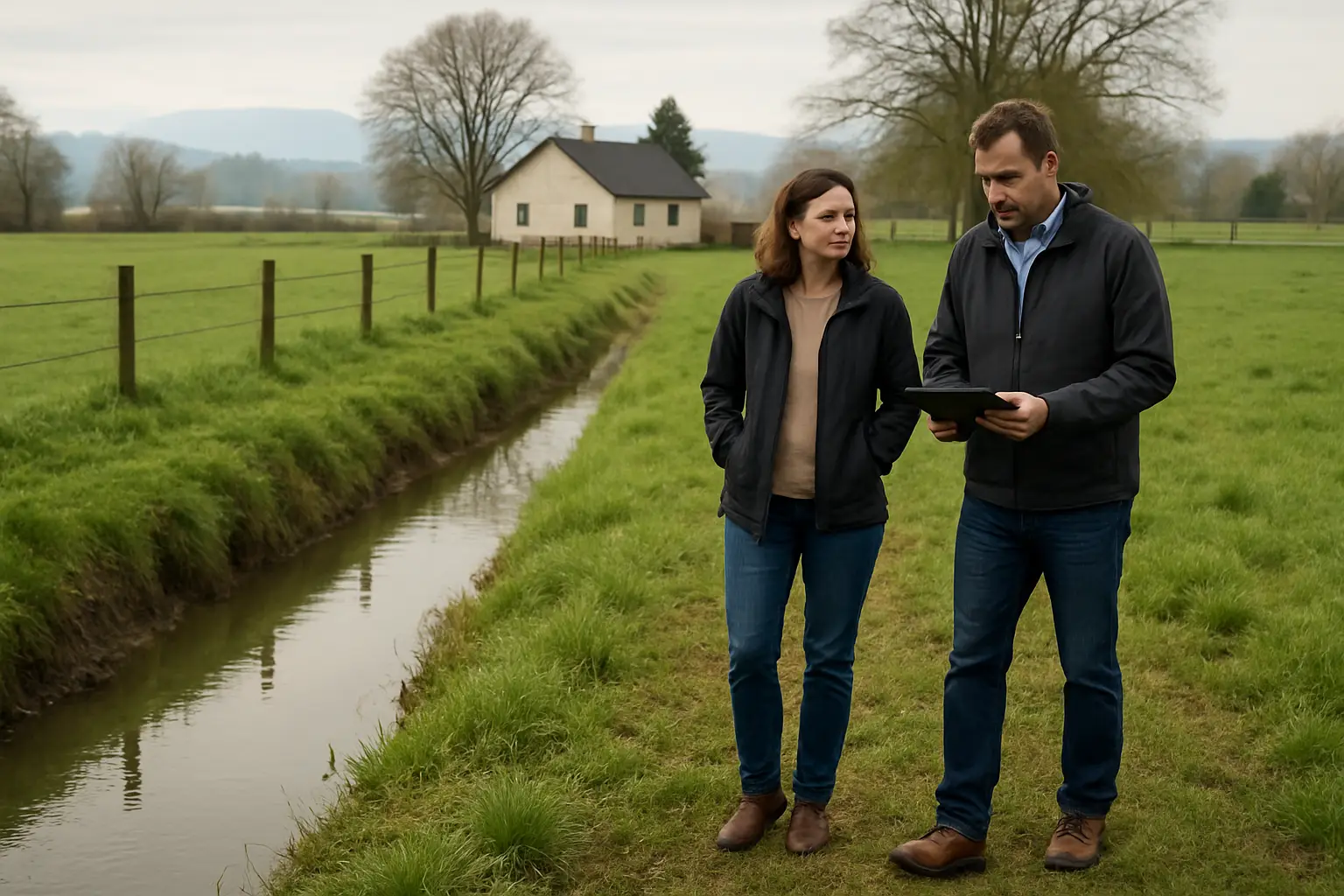
Chilliwack's geography matters.
The City identifies floodplain areas related to both the:
Fraser River, and
Vedder River.
It also notes that portions of Greendale and Yarrow fall within floodplain areas associated with both river systems.
If you are considering a rural property in one of these areas—or elsewhere on the valley floor—ask which mapped flood hazard applies to the actual parcel.
This is more useful than simply asking:
"Does Chilliwack flood?"
A better property-specific question is:
"What floodplain mapping and development requirements apply to this parcel?"
For broader community research, you can also review The Valley Life's Chilliwack real estate guide, which covers the local market and Chilliwack neighbourhood context.
4. Find the Flood Construction Level for the Property
When researching Chilliwack floodplain property, buyers will frequently encounter the term Flood Construction Level, or FCL.
The City uses flood construction levels and setbacks as part of its flood-hazard management framework.
In simple terms, the FCL is an elevation used in floodproofing and development requirements. It should not be treated as a DIY prediction of exactly how high floodwater would reach at a particular house.
The City's open-data information cautions that its FCL isolines are approximate and says the mapped FCL information is for informational purposes rather than something a person should independently rely upon for flood-risk estimation or mitigation decisions.
What should a buyer ask?
Ask:
What FCL applies to this parcel?
What elevation requirements applied when the house was constructed?
Is the existing finished floor elevation known?
Are elevation certificates, surveys or construction records available?
Would a future addition or replacement building be subject to current floodplain requirements?
Does the City recommend property-specific professional review?
These questions are particularly important when the reason for purchasing the property involves future construction.
5. Understand the City's Freeboard Requirement
Chilliwack's residential floodplain guidance describes floodplain elevation requirements as involving the applicable Flood Construction Level plus 0.6 metres of freeboard. The City's published guidance also describes circumstances in which different documentation, including a qualified professional's report and a registered covenant, may be relevant.
The City's FCL open-data page separately warns that the displayed flood construction levels themselves do not include the 0.6-metre freeboard.
For a buyer, that means a map elevation should not be interpreted in isolation.
If elevation compliance matters to your purchase or your future building plans, confirm the requirements with the City of Chilliwack and, where requested or appropriate, a qualified professional.
Do not calculate your own building elevation requirements based only on an online contour or map.
6. Ask for Building Permits and Construction Records
If the property already has a house, shop, barn, addition or other substantial improvement, ask what records are available.
Possible documents include:
original building permits;
occupancy records;
renovation permits;
addition permits;
site plans;
surveys;
elevation information;
engineering reports;
drainage documentation; and
correspondence concerning floodplain requirements.
The City confirms that its Floodplain Management Bylaw regulates construction elevation requirements for new development within floodplain areas.
Therefore, the existence of a finished building does not by itself answer every floodplain-compliance question a buyer may have.
If an improvement is important to your purchase—for example, a finished lower level, secondary accommodation or large addition—ask whether the relevant permits and approvals can be confirmed.
7. Review the Property Title for Relevant Covenants or Charges
Some properties can have registered covenants or other title charges affecting development or acknowledging particular property conditions.
Do not try to interpret legal title documents yourself.
Instead, obtain the title and have your lawyer or notary explain any relevant entries that could affect your ownership or intended use.
The City's own materials recognize that Section 219 covenants can remain registered against property titles and that registered covenants can be identified through a land-title search.
Questions to raise during title review
You may want to ask:
Is there a flood-related covenant on title?
Does it contain restrictions or obligations?
Does it affect future construction?
Are there easements associated with drainage, dikes or utilities?
Are there other charges that affect the area of the property I intend to use?
These are questions for an appropriate legal professional, not conclusions a buyer should draw from the wording alone.
8. Ask About Previous Water or Flood Events at the Property
A floodplain map provides planning information, but the property's own history can add useful context.
Ask the seller and review available disclosures for information about:
previous flooding;
water entering structures;
crawlspace or basement water;
drainage problems;
sump-pump operation;
foundation repairs;
water-related insurance claims;
repairs following flood or high-water events; and
improvements intended to manage water.
A property's past does not guarantee its future.
Likewise, a seller saying "it has never flooded" does not establish that future flooding cannot occur.
The City explicitly advises residents to plan on the basis that flooding remains a real possibility because flood events cannot be predicted with complete certainty.
9. Inspect the Site's Drainage and Lowest Areas
Floodplain due diligence is not limited to major river flooding.
During the inspection period, look at how water appears to move around the property.
Consider questions such as:
Does the land slope toward or away from the house?
Are there obvious low areas?
Are drainage ditches present?
Are culverts present?
Is there a sump pump?
Are there signs of previous standing water?
Is the driveway lower than surrounding roads or fields?
Are major mechanical systems located at low elevations?
Does water appear to collect near the foundation?
Do not use these observations to make engineering conclusions.
Instead, use them to decide whether the home inspector, drainage contractor, engineer or another appropriate specialist should investigate further.
IBC recommends several general water-damage mitigation measures for homeowners, including appropriate lot grading, sump pumps with backup power and locating important mechanical or electrical equipment above anticipated flood levels.
10. Pay Special Attention to Basements and Lower-Level Living Space
A finished basement can add significant value to a property, so buyers should understand how that space relates to applicable floodplain requirements.
Ask:
Was the lower level permitted?
Is it approved as living space?
Was the space added after the original house was constructed?
Are bedrooms or a suite located below the relevant flood construction elevation?
Are permits available?
Were floodplain requirements considered when the renovation was completed?
The existence of a renovated lower level should not lead to assumptions either way.
What matters is whether the property's records support the way the space is currently being represented and used.
11. Check Flood Insurance Before Removing Conditions
Insurance should be investigated before you become contractually committed where flood exposure is a material concern.
Do not assume your usual home-insurance policy automatically provides every form of flood coverage.
Insurance Bureau of Canada states that standard residential policies typically do not include overland flood coverage automatically. Optional residential overland flood coverage is offered by many insurers, with availability and pricing depending on risk. IBC recommends speaking directly with an insurance representative about the specific property.
Ask an insurance professional about the exact address
Useful questions include:
Is overland flood coverage available for this address?
What type of water damage does the proposed policy cover?
Is sewer-backup coverage separate?
Are there coverage limits?
Are there deductibles specific to water or flood losses?
Are there exclusions that matter for this property?
Does previous claims history affect coverage?
Are particular mitigation measures required?
Can coverage be bound on the possession date?
Do not rely on the seller's existing policy as evidence that you will receive identical coverage, terms or pricing.
Insurance decisions are property- and applicant-specific.
12. Don't Confuse Overland Flooding With Sewer Backup
This distinction matters when discussing insurance.
IBC explains that overland flooding generally refers to fresh water flowing over normally dry land, such as when rivers or other bodies of water overflow. Sewer backup is treated separately and commonly requires its own optional coverage.
So asking an insurer:
"Does the house have water coverage?"
may be too vague.
Ask specifically about:
overland flood;
sewer backup;
groundwater or surface-water scenarios;
applicable limits; and
exclusions.
Your insurance professional can explain how the proposed policy defines each risk.
13. Consider Your Future Plans for the Property
A house may work perfectly well for you today but become more complicated if you intend to make substantial changes.
Before buying, identify whether you plan to:
build a new house;
substantially renovate;
add a secondary dwelling;
add a shop;
construct a barn;
expand the existing home;
finish lower-level space;
change site grading;
create an additional driveway; or
redevelop part of the acreage.
Chilliwack's floodplain requirements regulate aspects of new development, including elevation and setbacks.
Therefore, buyers whose purchase depends on future construction should ask the City about the specific proposed project, not simply whether "building is allowed."
A property being usable in its current form does not guarantee that every future project will be approved in the form you envision.
14. Understand the Difference Between a Dike and a Guarantee
Chilliwack has substantial flood-protection infrastructure, including dikes and response planning.
However, flood-protection infrastructure should not be interpreted as a promise that flooding is impossible.
The City explicitly treats flooding as a hazard that requires ongoing preparation, infrastructure, emergency plans and development controls.
If a property's desirability depends heavily on assumptions about nearby dikes, ask:
Which dike system is relevant?
Is the property inside or outside the protected area?
What floodplain regulations still apply?
What does the City's map show?
Do current development rules change because of the property's location?
Refer property-specific technical questions to City staff or the appropriate qualified professional.
15. Remember That Flood Risk Can Affect Access and Services Too
A buyer may focus entirely on whether water could enter the house.
But a major flood event can create broader disruption.
The City cautions that even properties on higher ground may experience loss of essential services during a serious flood event, including water, sewer, electricity and gas. It also notes that evacuation may become necessary during major events.
For rural or acreage buyers, consider:
whether there is only one practical road access;
whether nearby roads cross low-lying areas;
where livestock would go during an emergency;
whether pumps depend on electricity;
how long the household could function without utilities; and
whether vulnerable family members require additional planning.
These are lifestyle and preparedness questions rather than reasons to automatically reject a property.
16. Know When a Qualified Professional May Be Appropriate
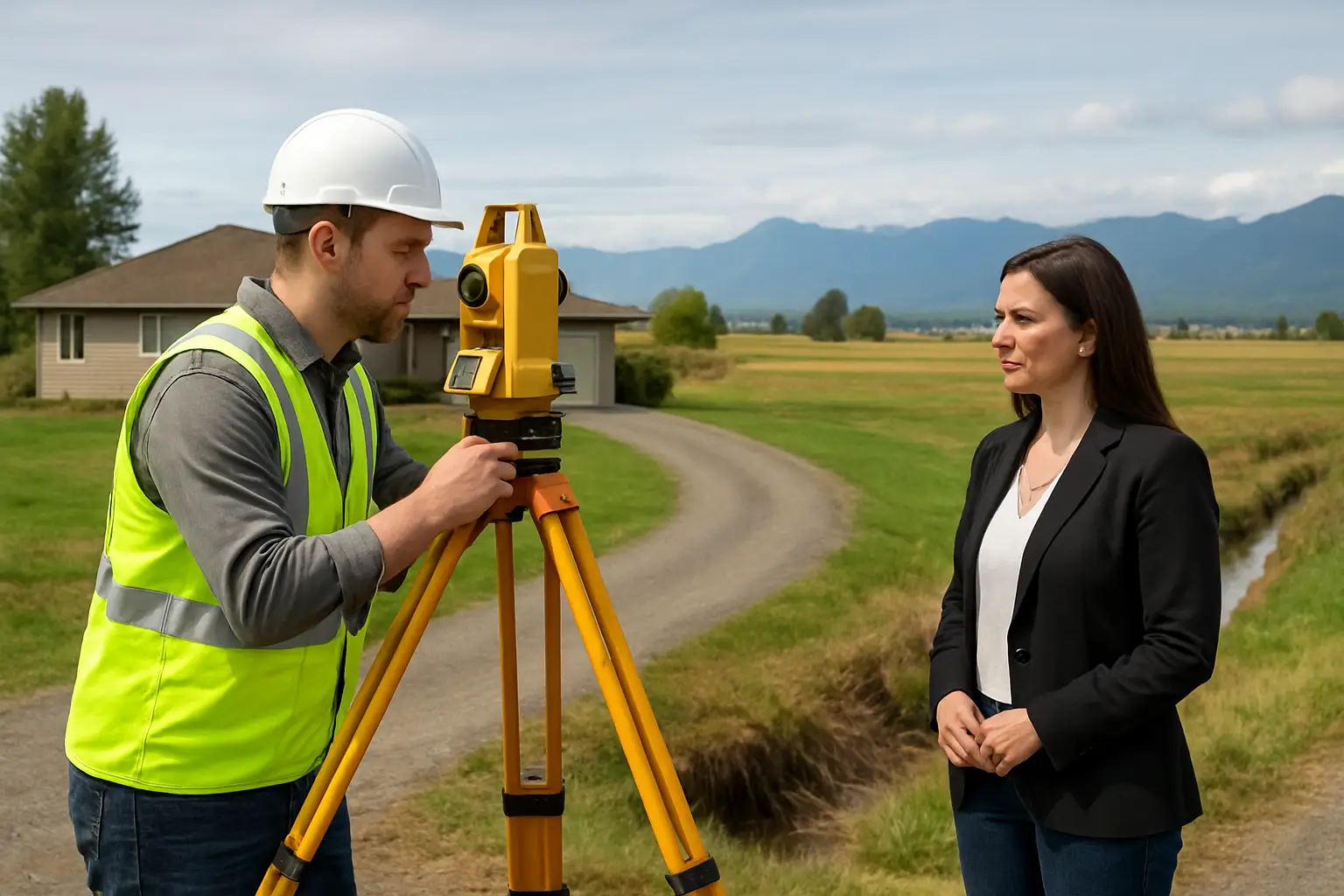
Some floodplain questions can be answered by maps and municipal records.
Others cannot.
If the transaction depends on matters such as:
exact building elevation;
proposed new construction;
floodproofing;
site-specific setback questions;
unusual terrain;
drainage design;
interpretation of existing technical reports; or
a request from the City for professional certification,
you may need input from an appropriately qualified professional.
The City's residential floodplain guidance specifically identifies circumstances where a qualified professional's report can be relevant to floodplain construction requirements.
Your Realtor can help coordinate the due-diligence process, but technical conclusions should come from the professional qualified to provide them.
17. Build Enough Time Into Your Purchase Conditions
Floodplain research can involve more than one phone call.
Depending on the property, you may need time to:
check the City floodplain map;
review elevation information;
obtain building records;
review title documents;
complete the home inspection;
obtain insurance information;
ask the City property-specific questions;
obtain a survey or elevation information;
consult a qualified professional; and
decide whether the findings are acceptable to you.
The broader buying process with The Valley Life includes inspections, document review and other due diligence before completing a purchase.
For a floodplain property, make sure your due-diligence period reflects the actual questions you need answered rather than treating every rural purchase as identical.
Chilliwack Floodplain Property Due-Diligence Checklist
Before removing conditions, consider whether you have answers to the following.
Floodplain status
Have I checked the official City of Chilliwack floodplain map?
Is the actual parcel inside a mapped floodplain?
Which river or flood hazard is relevant?
Have I confirmed any uncertainty with the City?
Elevation
What Flood Construction Level applies?
Is additional freeboard relevant to the applicable requirement?
Is reliable building-elevation information available?
Do I need a surveyor, engineer or another qualified professional to answer an elevation question?
Existing buildings
Are original building permits available?
Are permits available for additions?
Is lower-level living space permitted?
Are major renovations documented?
Are there reports relating to floodproofing or elevation?
Title
Has the current title been obtained?
Are there covenants or charges that require professional review?
Are easements present?
Has a lawyer or notary explained anything I do not understand?
Property history
Has the seller disclosed previous flooding or water intrusion?
Are repair records available?
Are past insurance claims relevant?
Has drainage work been completed?
Insurance
Have I obtained information for this exact address?
Is overland flood insurance available?
Is sewer-backup coverage separate?
Do I understand coverage limits and exclusions?
Can acceptable insurance be arranged for possession?
Site conditions
Does the yard drain appropriately?
Are there low areas or drainage ditches?
Is a sump pump present?
Are important mechanical systems located low in the building?
Does anything observed during inspection require specialist review?
Future plans
Do I intend to build or substantially renovate?
Have I asked the City whether current floodplain rules affect those plans?
Am I relying on unverified assumptions about redevelopment potential?
Before condition removal
Have my important questions been answered?
Have I received any professional reports I need?
Have I reviewed insurance options?
Have I reviewed title and property documentation?
Am I comfortable proceeding based on the information available?
Frequently Asked Questions About Buying Property in a Chilliwack Floodplain
How do I know if a Chilliwack property is in a floodplain?
Start with the City of Chilliwack's official Flood Protection page and floodplain mapping. The City provides maps specifically for determining whether an area is within the floodplain and also provides elevation information.
Are parts of Chilliwack in both the Fraser and Vedder River floodplains?
Yes. The City states that portions of Greendale and Yarrow lie within floodplain areas associated with both the Fraser and Vedder Rivers.
What is a Flood Construction Level in Chilliwack?
A Flood Construction Level is an elevation used as part of floodproofing and development requirements. Chilliwack applies FCLs and setbacks through its floodplain regulatory framework. Buyers should confirm the property-specific requirement with the City rather than independently interpreting map contours.
Does the mapped FCL already include the 0.6-metre freeboard?
The City's open-data information states that its displayed Flood Construction Level data does not include the 0.6-metre freeboard referenced in its residential floodplain requirements.
Can I renovate or build on a Chilliwack floodplain property?
Potentially, but the answer depends on the property, project and applicable regulations. Chilliwack's Floodplain Management Bylaw regulates elevation requirements for new development within floodplain areas. Discuss a specific proposal with the City before purchasing based on assumed development potential.
Is flood insurance automatically included in home insurance?
Not necessarily. IBC states that overland flooding is typically not included in a standard home policy and that optional residential overland flood coverage is offered by many insurers based on risk. Buyers should obtain property-specific insurance advice before relying on coverage assumptions.
Is sewer backup the same thing as overland flood insurance?
No. IBC treats sewer backup and overland flood damage as separate coverage issues, and each can require optional coverage.
Does being behind a dike mean a property cannot flood?
A dike is an important flood-protection measure, but the City continues to regulate development, maintain flood-response plans and advise residents to prepare for flooding as a real possibility. Buyers should therefore avoid interpreting flood infrastructure as a guarantee against loss.
Should I get an engineer for every Chilliwack floodplain property?
Not automatically. The appropriate professional depends on the question. A home inspector, surveyor, engineer, lawyer, insurance professional or City staff member may each address different parts of due diligence. Chilliwack's guidance identifies circumstances where a qualified professional's report may be relevant.
The Goal Is to Understand the Property Before You Commit
Buying property in a Chilliwack floodplain is not simply a decision between "safe" and "unsafe."
It is a due-diligence process.
Start with the official floodplain map. Identify the relevant flood system. Understand the applicable Flood Construction Level. Review building records and title information. Ask about previous water events. Confirm insurance options for the exact address. If your purchase depends on redevelopment or a technical assumption, get that question answered by the appropriate authority or professional before removing conditions.
If you are still searching for rural properties, browse current Chilliwack acreage listings.
For broader local context, review The Valley Life's Chilliwack real estate guide.
When you are preparing an offer, review the process for buying with The Valley Life and build a due-diligence checklist around the specific property's characteristics rather than relying on a generic inspection process.
Browse Chilliwack acreages and get help building a property-specific due-diligence checklist before removing conditions.
 The data relating to real estate on this website comes in part from the MLS® Reciprocity program of either the Greater Vancouver REALTORS® (GVR), the Fraser Valley Real Estate Board (FVREB) or the Chilliwack and District Real Estate Board (CADREB). Real estate listings held by participating real estate firms are marked with the MLS® logo and detailed information about the listing includes the name of the listing agent. This representation is based in whole or part on data generated by either the GVR, the FVREB or the CADREB which assumes no responsibility for its accuracy. The materials contained on this page may not be reproduced without the express written consent of either the GVR, the FVREB or the CADREB.