.png)

A Fraser Valley acreage can look like one large private piece of land when you walk the property.
The title may tell a more complicated story.
A driveway might cross another parcel. A neighbour may have a registered right to use part of the land. A utility provider may have access rights over a strip of the property. Another registered charge may affect an area where you hoped to build a shop, install fencing or change the driveway.
None of those situations automatically makes an acreage a bad purchase.
But they are reasons to understand the title before you make plans for the land.
The Land Title and Survey Authority of British Columbia, or LTSA, explains that a land title can show registered interests and charges including easements, statutory rights-of-way and covenants.
For Fraser Valley acreage buyers, the important question is therefore not simply:
“Does this property have an easement?”
It is:
“What is registered, where does it apply, who benefits from it, and could it affect how I intend to use this acreage?”
If you are currently comparing rural properties, you can use this checklist alongside current Fraser Valley acreage listings to identify title-related questions early in your search.
What Is an Easement on a BC Acreage?
In general terms, an easement allows someone else to use another person's land for a defined purpose while ownership of the land remains with the property owner.
The Province of British Columbia describes an easement as a situation where title remains with the landowner while another person or organization receives a right to use the land for a particular purpose.
That right could potentially relate to something such as access.
However, you should never assume the exact rights from a general label.
The registered easement document is what matters.
A Simple Rural Example
Imagine two Fraser Valley properties.
The rear property cannot conveniently reach the public road without crossing the front property.
A registered easement may provide access across a specified part of the front parcel.
The front property's owner still owns that land.
But ownership does not necessarily mean the owner can use that portion without considering the rights granted by the easement.
That is why acreage buyers need to look beyond lot size and boundary lines.
What Is a Statutory Right-of-Way in BC?
A statutory right-of-way, often shown as an SRW, is another type of registered land interest.
BC's Land Title Act defines a statutory right-of-way as an easement without a designated dominant tenement. The Province explains that these rights can be held by qualifying municipal, utility or industrial users rather than simply benefiting a neighbouring parcel.
Depending on the property, an SRW could relate to infrastructure such as:
utilities;
pipelines;
power infrastructure;
municipal works;
drainage-related infrastructure;
access associated with qualifying infrastructure.
These are examples only. The actual registered document must be reviewed to determine what a specific SRW permits.
Easement vs Statutory Right-of-Way: What Is the Difference?
For a buyer, the easiest starting point is to think about who or what benefits from the registered right.
An easement commonly involves rights connected with another parcel or defined beneficiary.
A statutory right-of-way can exist without a designated neighbouring parcel benefiting from it and can instead be held by qualifying entities for the purposes permitted by legislation.
But a buyer should not try to interpret a complicated title simply from the words “easement” or “statutory right-of-way.”
The practical questions are more important:
What land is affected?
Who holds the right?
What activities are permitted?
Can people or equipment enter the property?
Are there restrictions on construction?
Does it affect your intended use?
Is there a registered plan showing the affected area?
Those answers may require reviewing the actual registered instrument and associated plan.
Why This Matters More on an Acreage
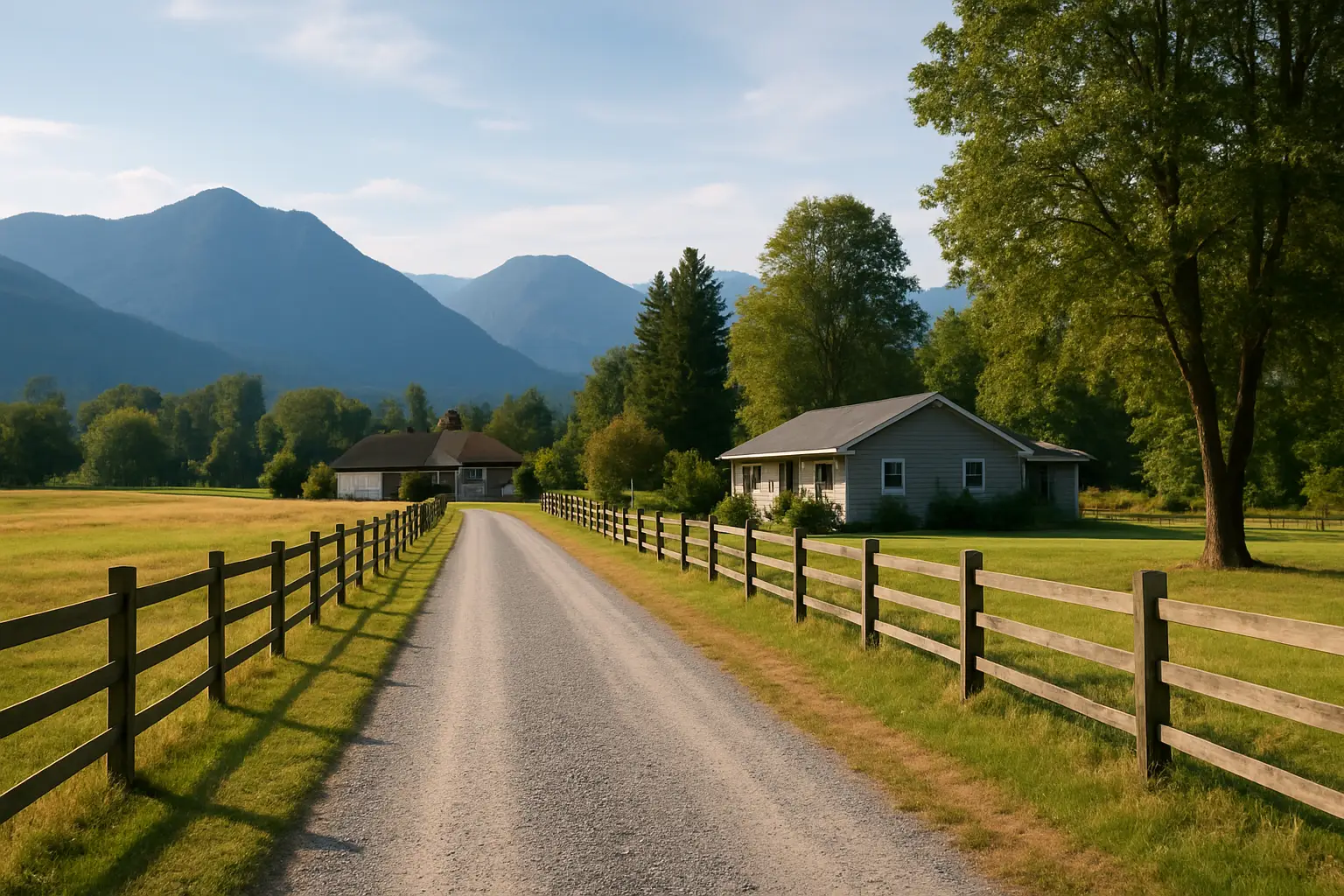
Easements and rights-of-way matter on any property.
They can be particularly important on acreage because buyers often purchase rural land with plans beyond simply living in the existing house.
You may be thinking about:
building a shop;
replacing a barn;
installing fencing;
creating paddocks;
changing driveway access;
building another permitted structure;
improving drainage;
planting;
running utilities;
subdividing in the future;
changing how different sections of the land are used.
A charge affecting a narrow strip near one boundary might have little effect on one buyer.
The same charge could be extremely important to someone whose future building site falls in that exact location.
That is why title review should be connected to your plans for the acreage, not treated as a paperwork exercise.
Common Easement and Right-of-Way Situations Acreage Buyers May Encounter
There is no single standard set of charges on Fraser Valley acreage.
However, several types of situations are worth watching for.
Shared or Neighbour Access
A neighbouring parcel may have access over part of the property.
This can be especially relevant where rural parcels were created in configurations that do not all directly front a public road.
Questions may include:
Where is the access route?
Is it currently being used?
What vehicles may use it?
Does the registered document address maintenance?
Does the route cross the area where you want to build or fence?
Do not assume that an existing gravel driveway tells you the full legal arrangement.
Your Access Across Someone Else's Property
The issue can also work in the opposite direction.
An acreage you want to buy may rely on crossing another property to reach a road.
If legal access is important to the property, your professional advisers should verify the registered arrangements rather than relying only on the fact that a driveway physically exists.
A visible road and a registered legal right to use it are not necessarily the same thing.
Utility Rights-of-Way
A utility or other qualifying organization may hold a registered right over part of a property.
Depending on the document, that could affect what can be placed or constructed within the affected area.
A buyer considering a new:
barn;
workshop;
fence;
driveway;
landscaping project;
other improvement
should identify relevant registered interests before assuming the entire parcel is available for that use.
Municipal or Infrastructure Rights
Some statutory rights-of-way may support public or infrastructure purposes.
The Land Title Act requires a statutory right-of-way plan in applicable cases and provides requirements for showing the affected area.
That plan can therefore be highly relevant when you need to understand where a registered right crosses a large parcel.
Drainage-Related Interests
Rural Fraser Valley properties can have drainage infrastructure and water-management considerations that are less common on small urban lots.
If the title identifies a charge connected with drainage or infrastructure, do not guess what it means from the charge name.
Have the registered document reviewed.
Where Do You Find Easements on a BC Property?
Start with the current land title.
LTSA explains that a title search provides the registered owner's information, legal description, Parcel Identifier or PID, and charges, liens and interests registered against the title.
Common title charges identified by LTSA include:
statutory rights-of-way;
easements;
covenants;
mortgages;
leases;
judgments;
builders liens.
This is important because looking at the property is not enough.
An easement does not need to look obvious on the ground.
How Do You Search a Property Title in BC?
LTSA states that the best way to search for a title is using the property's nine-digit Parcel Identifier, or PID.
If you do not know the PID, LTSA says it can be found using sources such as ParcelMap BC, BC Assessment or applicable tax information. A civic address itself is not used directly for the LTSA title search.
LTSA also notes that professionals can obtain a title and assist with interpreting it.
For a buyer, that creates a useful process:
identify the correct property;
confirm the PID;
obtain the current title;
identify registered charges;
obtain relevant registered documents and plans;
have anything material to the purchase properly reviewed.
A Title Entry Is Only the Beginning
Seeing something like an easement or SRW listed on title tells you that the registered interest exists.
It may not tell you enough to understand its practical effect.
A buyer may need the underlying document to determine issues such as:
who holds the right;
what purpose it serves;
which part of the property it affects;
what activities are permitted;
whether access is included;
whether construction or obstruction is restricted;
whether maintenance obligations are addressed.
That is why simply asking:
“Are there any easements?”
is weaker than asking:
“Can we obtain and review the registered easement documents and plans that affect this property?”
Does an Easement Affect the Whole Acreage?
Not necessarily.
Some registered interests affect only a defined portion of a parcel.
For statutory rights-of-way, the Land Title Act contains requirements for plans showing the area affected and its relationship to the parcel.
LTSA also explains that plans can show specific areas within a property where easements, rights-of-way or other interests apply.
For an acreage buyer, that distinction can be very important.
A 20-acre property might have a right-of-way covering only a small strip.
But location matters more than percentage.
If that strip runs directly through:
the only practical building area;
a proposed barn location;
the driveway;
the property's usable frontage;
its practical significance may be much greater than its physical size suggests.
Why You Should Look at the Survey Plan
A title tells you what registered interests exist.
A relevant plan may help show where an interest is located.
LTSA explains that land survey plans are prepared by professional BC land surveyors and can depict legal boundaries and dimensions. Copies of many registered plans can be obtained through LTSA services or with help from a land surveyor, legal professional or registry agent.
This distinction matters:
Title = what is registered.
Registered instrument = what the rights and obligations may say.
Plan = where the affected area may be shown.
For a meaningful acreage-title review, you may need more than one of these.
Can You Rely on an Online Parcel Map?
Online mapping is useful for orientation.
It should not replace the legal records.
LTSA describes ParcelMap BC as the trusted mapped representation of titled and Crown parcels across the province, but specifically states that it is not the authoritative source for the legal property boundary or related record attributes. The authoritative information remains the survey plan or related registry information.
So ParcelMap BC can help you understand the property.
It should not be used to make a precise legal conclusion about where an easement or boundary sits on the ground.
When Should You Involve a BC Land Surveyor?
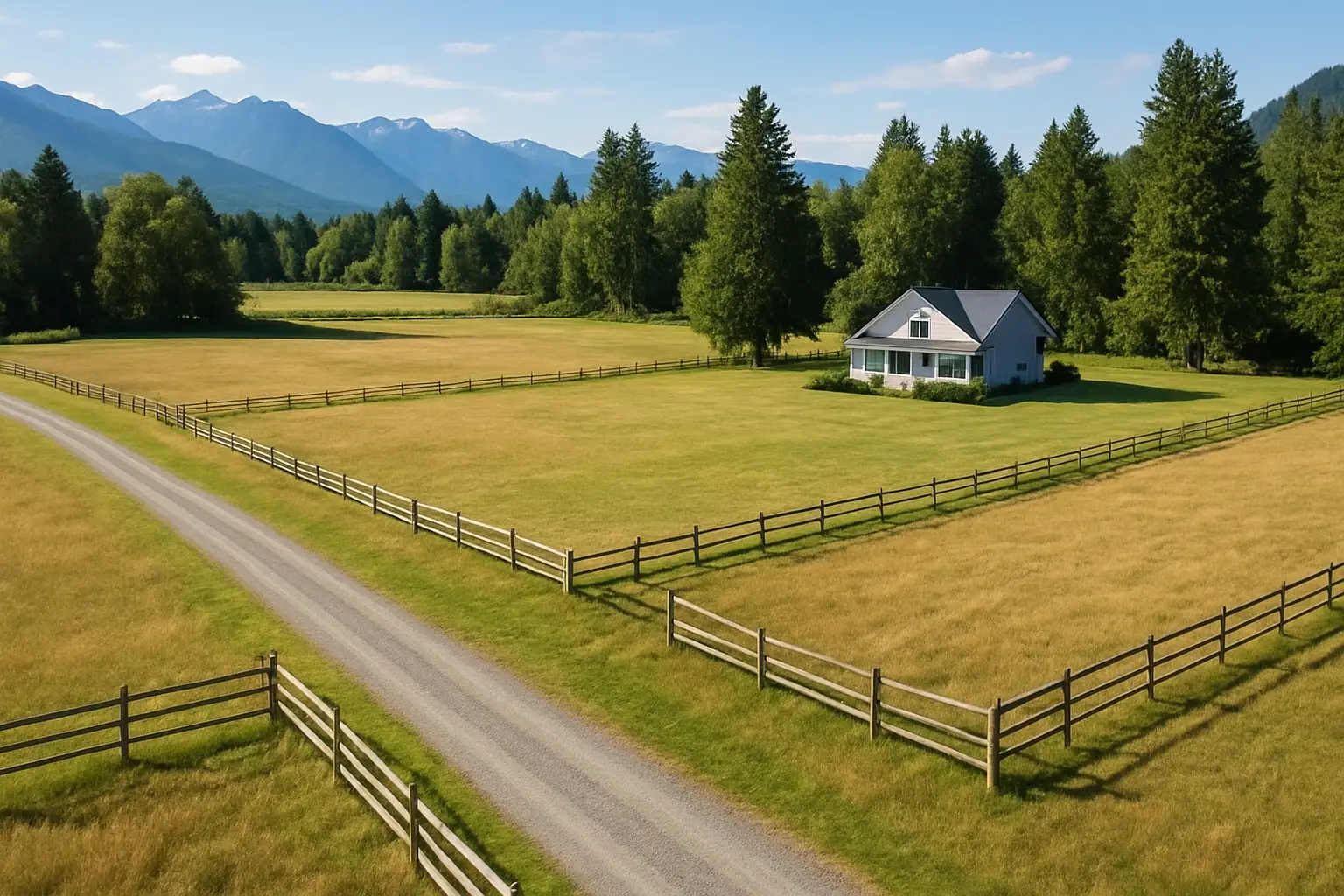
A survey professional can be especially valuable when the problem is not simply:
“What does this document say?”
but:
“Where is this actually located on the land?”
LTSA advises contacting a member of the Association of British Columbia Land Surveyors when assistance is needed to locate property boundaries or complete a land survey.
Situations where a buyer may want professional survey assistance include uncertainty about:
property boundaries;
the physical location of a registered plan area;
a driveway relative to a boundary;
an existing fence;
a proposed building location;
an apparent encroachment;
the relationship between improvements and registered interests.
A real estate listing map should not be treated as a legal survey.
When Should You Involve a Lawyer or Notary?
If a registered charge matters to your decision, involve the appropriate legal professional before trying to interpret it yourself.
LTSA recommends professional assistance when accessing and working with land-title records and advises property owners to consult a legal professional for title-related matters.
That becomes particularly important when you need answers to questions such as:
What rights does this registered document actually grant?
Does it bind future owners?
Who benefits?
What obligations could transfer with the property?
Could my proposed use conflict with it?
Can it be modified or discharged?
What effect could it have on a proposed purchase?
The answer depends on the actual registered instrument.
This blog cannot provide that interpretation.
Can an Easement Simply Be Removed?
Do not assume so.
A registered easement is a charge on title, and removing a registered charge involves the applicable legal and land-title process.
LTSA notes that cancellation of a registered easement requires an application under the Land Title Act when the charge has been satisfied, surrendered, released or discharged as applicable.
So if a buyer sees an old-looking easement and thinks:
“Nobody uses that anymore, so we can just remove it.”
that conclusion needs professional verification.
Physical non-use does not by itself tell you the current legal status of the registered charge.
Can You Build on an Easement or Right-of-Way?
There is no reliable yes-or-no answer that applies to every easement or SRW.
The answer depends on:
the registered document;
the affected area;
the proposed structure;
who holds the registered right;
applicable municipal or provincial requirements.
Do not rely on a general internet statement saying that you can or cannot build on a right-of-way.
Instead:
locate the affected area;
obtain the registered document;
define what you want to build;
have the applicable restrictions reviewed;
verify other required approvals.
That approach is much safer than making assumptions after closing.
Fraser Valley Acreage Example: Why Location Matters
Consider a hypothetical rural property with ten acres.
A registered utility SRW crosses a narrow strip along the far rear boundary.
Buyer A wants the existing house, garden and pasture and has no plans near that area.
The SRW may have little practical effect on Buyer A's intended use.
Buyer B wants to build a large workshop exactly where that corridor is located.
For Buyer B, the same registered right could become a major issue requiring investigation.
This is why asking whether an acreage “has an easement” is not enough.
The effect depends on the easement, the location and the buyer's plans.
Easements and Shared Driveways
Shared rural driveways deserve particular attention because what appears simple during a showing can involve several separate questions.
Ask Who Owns the Driveway Land
Is the driveway:
entirely on the acreage;
entirely on a neighbour's property;
partly on both;
located within a registered easement area?
Do not determine this from a fence line alone.
Ask Who Has the Right to Use It
If neighbouring owners use the driveway, determine whether there is a registered basis for that access.
If the acreage relies on someone else's land, verify the legal access supporting your property.
Ask About Maintenance
Buyers often want to know who handles:
gravel;
grading;
snow;
drainage;
gates;
repairs.
Do not invent the answer from current practice.
Review what the relevant documents actually provide and obtain professional advice where needed.
Easements and Acreage Development Plans
If you are purchasing land because you plan to change it, title review becomes even more important.
Before assuming a future project will fit, compare the project area against registered interests.
Proposed Shop or Barn
Check whether:
a right-of-way crosses the proposed site;
setbacks or other regulations apply;
utility access could conflict with the structure.
New Fencing
A fence may appear minor, but consider whether it would interfere with registered access rights.
New Driveway
Check both physical feasibility and legal access.
Future Subdivision
Subdivision involves far more than easement review, but existing access arrangements and registered charges can be relevant to the property's layout and development analysis.
Additional Residence
If legally permitted under applicable land-use rules, the proposed residence still needs a suitable physical location. Existing title interests should be part of that site review.
This is why a property-specific buying process matters. The Valley Life's guide to buying a home in the Fraser Valley explains the wider purchasing and due-diligence process, while this article focuses specifically on title interests.
Do Easements Reduce Acreage Value?
There is no responsible universal answer.
An easement may:
have little practical effect on one property;
affect a highly valuable part of another;
provide necessary access that benefits the property;
limit a particular future use;
matter differently to different buyers.
The relevant factors can include:
location;
purpose;
size of the affected area;
frequency of use;
rights granted;
property configuration;
buyer plans.
So rather than asking:
“How much does an easement reduce value?”
ask:
“How does this particular registered interest affect this particular property's current and intended use?”
That is a much more useful due-diligence question.
Fraser Valley Acreage Easement and Right-of-Way Checklist
Use this checklist when a rural property becomes a serious purchase candidate.
1. Confirm the Exact Property
Make sure you are reviewing records for the correct:
civic address;
legal description;
PID.
LTSA says the nine-digit PID is the preferred identifier when searching for a land title.
2. Obtain a Current Title
Do not rely only on:
an old title;
MLS remarks;
seller recollection;
a property map.
Review current registered information.
3. Identify Relevant Charges
Look for entries such as:
easements;
statutory rights-of-way;
covenants;
other interests requiring investigation.
LTSA identifies these among the common charges that can appear on title.
4. Obtain the Registered Documents
Do not stop at the charge number or description.
Ask for the underlying instrument when it could affect your decision.
5. Identify Who Benefits
Determine whether the right benefits:
another property;
an organization;
a utility;
a government body;
another qualifying holder.
Your legal professional can help interpret the specific document.
6. Determine the Purpose
Is the registered right related to:
access;
infrastructure;
utilities;
another specific purpose?
Do not infer the answer from where a path or utility line appears on the land.
7. Find the Affected Area
If a plan exists, determine where the registered area lies relative to:
the house;
driveway;
barns;
shops;
wells;
septic infrastructure;
fields;
proposed improvements.
8. Compare It With Your Plans
Write down what you actually intend to do.
For example:
Build a 2,000-square-foot detached shop behind the house.
That is much easier to evaluate than:
I might develop the property someday.
9. Look at Access
If you rely on another property for access—or someone relies on yours—make access one of your priority questions.
10. Investigate Existing Improvements
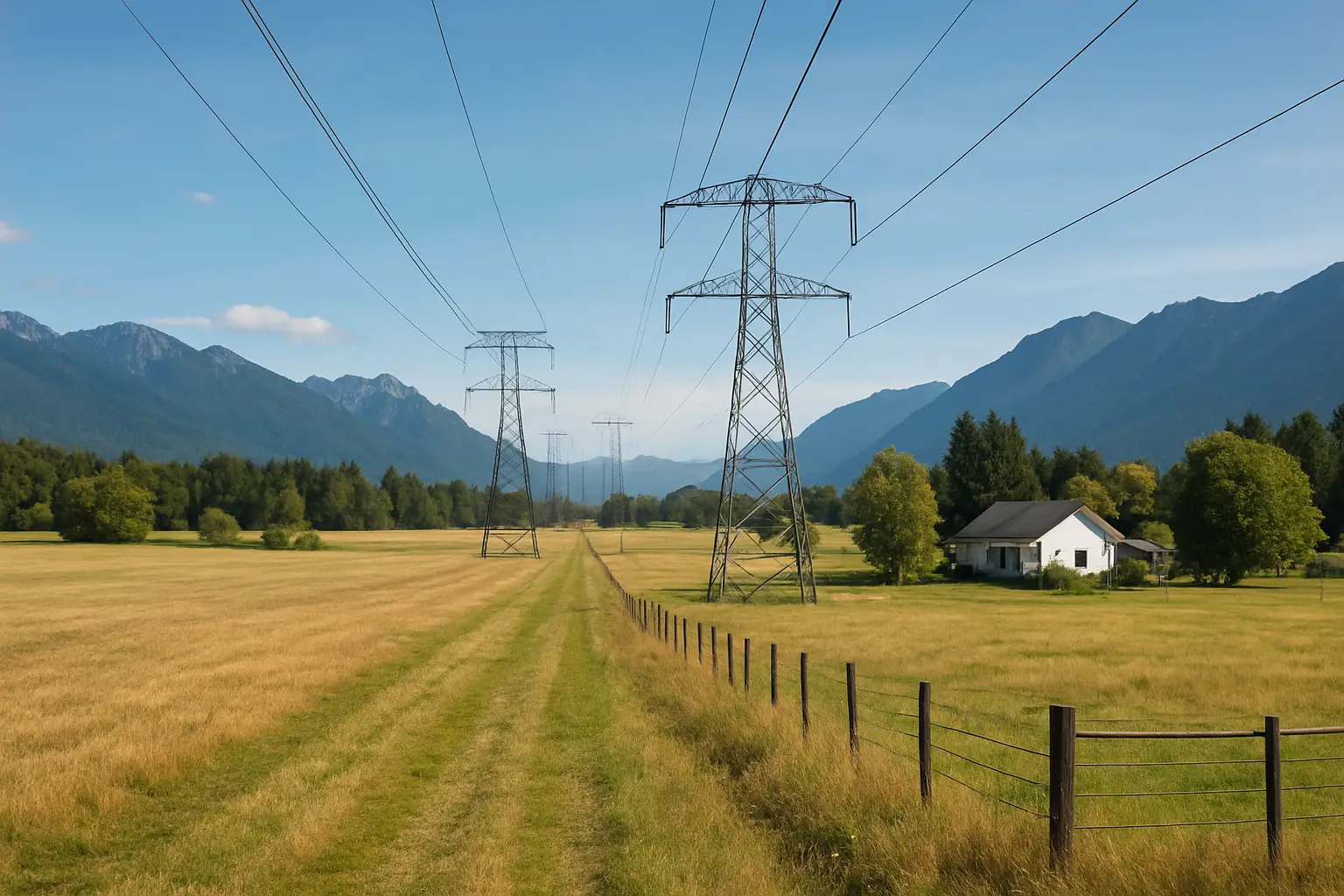
Determine whether:
fences;
driveways;
buildings;
gates;
landscaping
appear to interact with the registered area.
Do not assume that existing conditions automatically establish legal rights.
11. Check Whether Survey Help Is Needed
If the issue depends on where something sits on the ground, consider a BC land surveyor.
LTSA directs owners to professional BC land surveyors for property-boundary assistance.
12. Get Legal Interpretation Where Needed
Do not interpret a significant easement or statutory right-of-way from a blog post.
Have the actual document reviewed when it matters to your purchase.
13. Verify Questions Before Removing Conditions
If your purchase depends on:
secure access;
a future building location;
driveway changes;
subdivision potential;
uninterrupted use of a particular area;
resolve material title questions at the appropriate stage of due diligence rather than after closing.
Questions to Ask When Viewing Fraser Valley Acreage
Title Questions
Has a current title been obtained?
What easements or statutory rights-of-way are registered?
Can we obtain copies of the registered documents?
Are plans registered with any of them?
Access Questions
Does this property rely on access over another parcel?
Does anyone cross this property to reach theirs?
Is the existing driveway completely within the property?
What registered rights apply to that access?
Land-Use Questions
Does a registered interest cross the area where I want to build?
Could fencing affect an access route?
Are utility or infrastructure corridors located near proposed improvements?
Professional Review Questions
Should my lawyer or notary review this charge?
Is a land surveyor needed to identify the affected area on the ground?
Are there other specialists needed because of my intended use?
These questions keep the conversation focused on the actual property.
Red Flags That Deserve More Investigation
A red flag does not automatically mean you should walk away.
It means do not proceed on assumptions.
Look more closely when:
the listing says “shared driveway” but the legal access arrangement is unclear;
someone crosses the acreage regularly;
the house relies on access through another parcel;
the title contains a charge nobody can readily explain;
an SRW crosses a planned building area;
fences or buildings appear close to a registered corridor;
the seller says an easement is “not used anymore”;
the acreage is being marketed for development but registered interests affect important areas;
the physical driveway does not appear to match available plans;
the success of your purchase depends on interpreting a title charge a particular way.
The right response is investigation, not panic.
Frequently Asked Questions
What Is an Easement on Acreage in BC?
An easement generally gives another person or organization a right to use land for a defined purpose while ownership remains with the landowner. The exact rights depend on the registered instrument.
What Is a Statutory Right-of-Way in BC?
A statutory right-of-way is a registered land interest without a designated dominant tenement and may be held by qualifying entities for purposes permitted under BC law.
Will an Easement Show on a BC Property Title?
Registered easements and statutory rights-of-way are among the interests that can appear as charges on a land title.
Does an Easement Mean Someone Else Owns Part of My Property?
Not necessarily. The Province describes an easement as providing another party with a defined right to use land while title remains with the landowner.
Can a Right-of-Way Affect Only Part of an Acreage?
Yes. Registered interests can affect defined portions of a property, and relevant plans may identify the affected area.
How Do I Find Where a Right-of-Way Is Located?
A registered survey plan may identify the affected area. When physical location or property boundaries need to be established accurately on the ground, LTSA recommends using a professional BC land surveyor.
Can I Build a Shop on a Right-of-Way?
There is no general answer. The registered document, location of the right, proposed building and other applicable regulations need to be reviewed. Do not assume permission or prohibition without property-specific investigation.
Can I Fence Across an Easement?
That also depends on the rights granted by the particular instrument and the proposed fence. If the issue matters to your plans, obtain legal advice about the actual registered document rather than relying on a general rule.
Can an Easement Be Removed?
Registered easements are formal title charges. LTSA explains that cancellation of a registered charge follows the applicable Land Title Act process when the charge has been satisfied, surrendered, released or discharged. It should not be assumed that an easement can simply be removed because it appears old or is not actively used.
Is ParcelMap BC a Legal Survey?
No. LTSA says ParcelMap BC is an authoritative graphical representation of parcels, but it is not the authoritative source for the legal boundary. The registered plan of survey or related registry information remains authoritative.
Should I Get a Lawyer or Notary to Review an Easement Before Buying?
Where a registered interest could affect your purchase or intended property use, professional review is appropriate. LTSA recommends professional assistance with land-title records and title-related matters.
Do All Fraser Valley Acreages Have Easements?
No. Registered interests vary by property. Buyers should review the current title of the specific acreage rather than assuming what will or will not be registered.
Before You Buy: Focus on the Actual Parcel
Easements and rights-of-way should not automatically scare you away from a Fraser Valley acreage.
They should make you ask better questions.
A registered access right may be essential to a property.
A utility corridor may sit in a location that does not interfere with your plans.
Or a title charge may cross the exact area you intended to use for a future improvement.
The difference cannot be determined from the word “easement” alone.
For a serious acreage purchase, work through the process in order:
Get the current title.
Identify registered easements, SRWs and other relevant charges.
Obtain the underlying documents and plans.
Determine where they affect the parcel.
Compare those areas with your intended property use.
Use a land surveyor when physical boundaries or locations need professional confirmation.
Use a lawyer or notary when the legal meaning or consequences of a registered document need to be understood.
If you are still searching, start by exploring current Fraser Valley acreage listings. Once you identify a serious candidate, use The Valley Life's guide to buying a home in the Fraser Valley to place title review within the wider purchase process.
For help building a property-specific search and buying plan, you can also contact The Valley Life.
The goal is not to find an acreage with a perfectly empty title.
It is to understand what is registered before you buy, how it relates to the land, and whether the property still works for the way you intend to use it.
 The data relating to real estate on this website comes in part from the MLS® Reciprocity program of either the Greater Vancouver REALTORS® (GVR), the Fraser Valley Real Estate Board (FVREB) or the Chilliwack and District Real Estate Board (CADREB). Real estate listings held by participating real estate firms are marked with the MLS® logo and detailed information about the listing includes the name of the listing agent. This representation is based in whole or part on data generated by either the GVR, the FVREB or the CADREB which assumes no responsibility for its accuracy. The materials contained on this page may not be reproduced without the express written consent of either the GVR, the FVREB or the CADREB.