.png)

A Fraser Valley property can look like an ideal place for a home, workshop, horses, small farm or future building project—but before you make plans based on the size of the parcel, you should determine whether any of the land is inside British Columbia's Agricultural Land Reserve (ALR).
The ALR is a provincial land-use zone where agriculture is the priority use. Being inside the ALR does not mean you cannot buy or live on the property. It does mean that provincial agricultural-land rules may affect what you can build, how you can use the land, whether it can be subdivided and whether particular non-farm activities are permitted.
Fortunately, buyers can perform an initial ALR check online before getting far into a transaction.
The most important starting point is the Agricultural Land Commission's official ALR Property and Map Finder, which lets you search by civic address or nine-digit Property Identifier (PID).
If you are currently comparing rural properties, you can also browse Fraser Valley acreage listings, Abbotsford acreage listings, or Chilliwack acreage listings.
Once a particular property becomes serious, however, ALR status should be checked against the specific parcel, not assumed from the listing description or surrounding properties.
Quick Answer: How Do I Check if a Property Is in the ALR in BC?
To check whether a Fraser Valley property is in the Agricultural Land Reserve:
Find the property's civic address and, preferably, its nine-digit PID.
Open the Agricultural Land Commission's ALR Maps and Property Finder.
Search the property by PID or civic address.
Zoom in and examine the parcel boundary.
Look for the ALR layer, displayed by the ALC as light green with a dark green outline.
Determine whether the entire parcel or only part of it appears to fall inside the ALR.
Review the property's certificate of title as a secondary check.
If the mapping remains unclear, contact the ALC to confirm the property's ALR status.
If the property is in the ALR, separately verify local zoning, permitted uses, building rules and your intended plans with the municipality or regional district.
The ALC specifically cautions buyers that a notation on title is not a definitive way to determine ALR status, so the current ALC mapping should be checked.
Step 1: Get the Correct Property Address and PID
Before searching a map, make sure you are checking the correct parcel.
A street address is useful, but a Property Identifier (PID) can be more precise because it identifies the legal parcel rather than simply the mailing or civic address.
The ALC Property and Map Finder allows searches using either:
the civic address; or
the nine-digit PID.
For unusual rural properties, multiple adjacent parcels, farms with several titles or land without an obvious street address, confirming the PID becomes especially important.
A large property marketed as one acreage may not necessarily represent only one legal parcel.
Where can a buyer find the PID?
Depending on what documents are available, the PID may appear on:
the certificate of title;
property disclosure or transaction documents;
municipal or regional property information;
BC Assessment-related property information; or
other legal-property records.
If you are unsure which legal parcel is included in the sale, clarify that before relying on any ALR map search.
Step 2: Use the Official ALC Property and Map Finder
Go to the Provincial Agricultural Land Commission's:
The ALC states that its interactive tool is designed to help users determine whether properties are in the Agricultural Land Reserve. You can search by address or PID and zoom in for more detailed mapping.
What does the ALR look like on the map?
According to the ALC, ALR land appears light green with a dark green outline in its Property and Map Finder.
Do not stop after seeing that the general neighbourhood contains ALR land.
Zoom in far enough to identify the actual parcel you are considering.
In parts of Abbotsford, Chilliwack, Langley and the broader Fraser Valley, residential, agricultural and other land uses can exist relatively close together. What applies to a parcel across the road does not automatically determine the status of the property you are buying.
Step 3: Check Whether the Entire Property or Only Part Is in the ALR
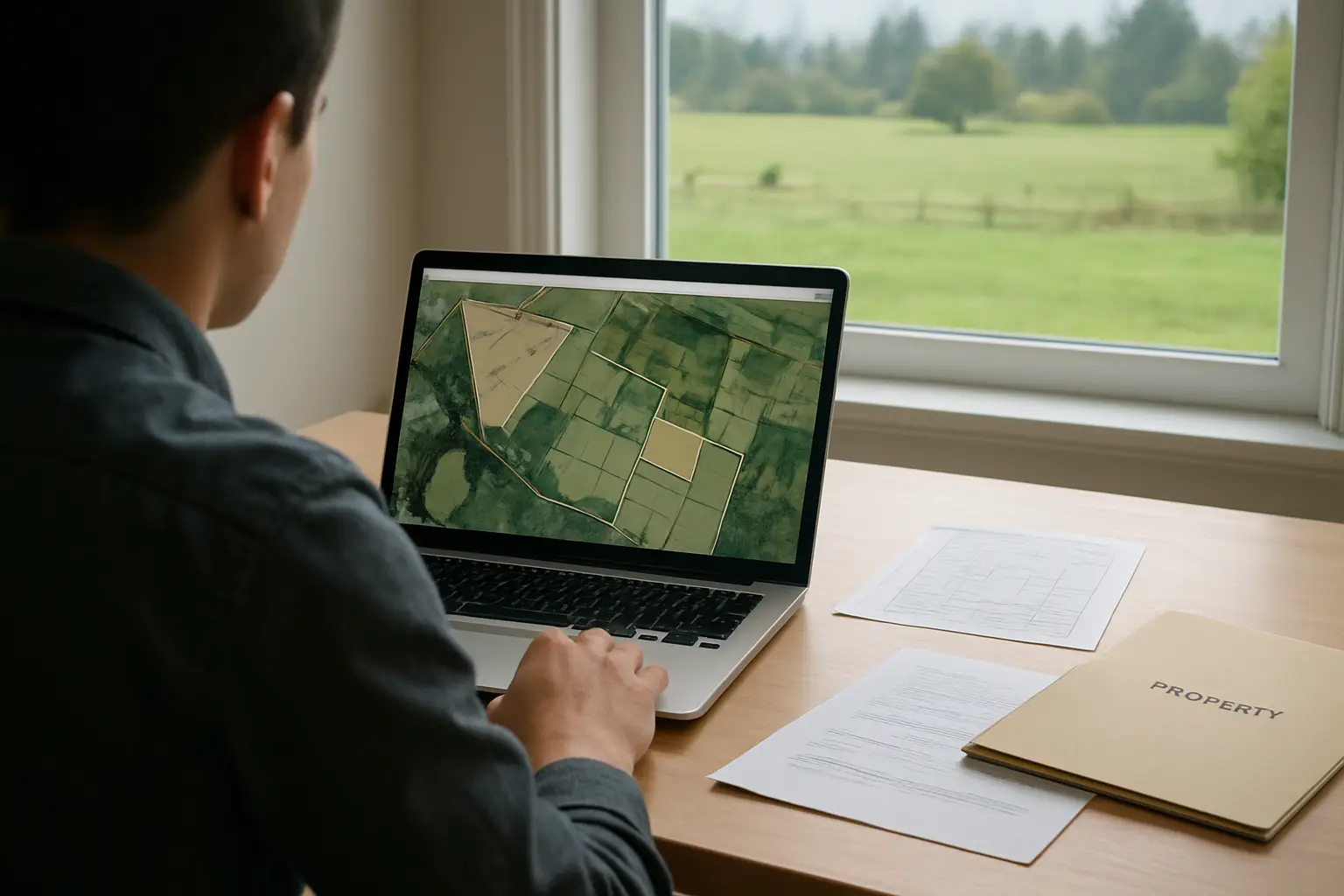
This is one of the most important details buyers can miss.
A parcel can be partially inside the ALR.
The ALC expressly states that where only part of a property is within the ALR, ALR rules apply to the portion lying within the reserve.
That can make due diligence more complicated than simply answering "yes" or "no."
For example, suppose a property has:
a residence near the front;
several acres behind the home;
a barn;
an undeveloped section; and
plans for a future shop or secondary structure.
If the ALR boundary crosses the parcel, the location of the proposed use relative to that boundary may matter.
If the property appears partially within the ALR, ask:
Where exactly does the ALR boundary cross the parcel?
Is the existing house within or outside the ALR portion?
Where are existing accessory buildings located?
Where would I want to build anything new?
Does my intended use fall within the ALR portion?
Are there previous ALC decisions affecting the property?
For a property where future development is a major reason for buying, do not make assumptions from a zoomed-out map screenshot.
Step 4: Review the Certificate of Title—but Do Not Rely on It Alone
A property's certificate of title may contain an Agricultural Land Commission notation.
However, the ALC specifically warns that title notation is not conclusive evidence of current ALR status. It notes that some titles carrying an ALR notation have subsequently been found outside the reserve, while parcels without the notation have sometimes been found within it.
Therefore:
Use title information as a secondary reference, not your only ALR check.
The better process is:
Current ALC mapping → title review → ALC confirmation if uncertainty remains.
If you find an ALR notation on title but the current map appears inconsistent with it—or vice versa—the ALC advises contacting its GIS and Mapping Department with the property's identifying information.
Step 5: Search for Previous ALC Applications and Decisions
Once you know a property is inside or partially inside the ALR, another useful step is researching whether the parcel has previously been involved in an ALC application.
The Agricultural Land Commission maintains an Application and Decision Search that provides public access to application summaries, associated mapping and Reasons for Decision documents.
Previous decisions can potentially provide context about proposals involving matters such as:
subdivision;
non-farm uses;
exclusions or inclusions;
soil or fill;
residential proposals; or
other property-specific applications.
Do not assume that a previous approval automatically permits a new proposal, or that a previous refusal means nothing could ever be approved.
Instead, use the history as another due-diligence source and have the current situation reviewed when your intended use matters to the purchase.
Step 6: Decide What You Actually Want to Do With the Property
Knowing that a parcel is in the ALR is only half the job.
The next question is:
Does ALR status affect what I personally want to do with this property?
The ALC recommends that purchasers be clear about their intended use and confirm what is allowed under both ALR rules and local zoning before purchasing.
Potential buyer plans that deserve investigation can include:
building a new home;
replacing an existing residence;
adding another residence;
constructing a shop;
operating a business;
creating an equestrian facility;
running a farm;
adding tourist or accommodation uses;
subdividing the parcel;
changing an existing building's use;
bringing fill onto the property;
removing soil; or
using part of the land for a non-agricultural purpose.
Do not assume that because something already exists on the property it was necessarily authorized.
The ALC specifically cautions prospective buyers that the existence of buildings or ongoing activities does not itself establish that those buildings or activities comply with ALR rules.
Step 7: Understand That ALR Status and Local Zoning Are Different
This is probably the most important regulatory concept for a Fraser Valley acreage buyer.
ALR designation does not replace municipal or regional-district zoning.
You may need to comply with both.
The ALC explains that its legislation takes precedence where local zoning would otherwise allow something prohibited by ALR rules. At the same time, a municipality or regional district may impose restrictions that are more limiting than what the ALR framework permits.
In practical terms:
If the ALC permits something
That does not automatically mean the municipality permits it.
If municipal zoning permits something
That does not automatically mean ALR rules permit it.
If one authority approves something
You may still require approvals from another authority.
The ALC notes that some proposals require approvals from multiple agencies and that approval from one does not guarantee approval from another.
This is why buyers should avoid making a purchase decision based on a single statement such as:
"It's zoned agricultural, so I can do it."
or:
"The Realtor listing says a second home is possible."
The intended use needs to be tested against the actual rules applicable to that parcel.
Step 8: Contact the Municipality or Regional District
After confirming ALR status, contact the local government responsible for the property.
For a Fraser Valley property, that could mean a municipality such as Abbotsford, Chilliwack, Langley or Mission, or a regional district for properties outside municipal boundaries.
The ALC itself encourages applicants to contact their local government to identify applicable zoning, agricultural-land preservation policies and other regulations relevant to a proposal.
Ask local planning staff about:
current zoning;
permitted principal uses;
permitted accessory uses;
number of residences allowed;
minimum setbacks;
building size limitations;
farm-related structures;
home-based businesses;
subdivision rules;
secondary suites or additional dwellings;
development permit areas;
floodplain requirements;
riparian or environmental restrictions;
servicing requirements;
building permits; and
any known property-specific approvals.
You can also review the Province's information about local government planning and land use for broader context.
Step 9: Review the Official Community Plan and Other Local Designations
Zoning is not always the only local planning layer that matters.
Local governments use Official Community Plans (OCPs) to establish broader land-use policies and long-term planning direction.
The Province confirms that where an OCP covers ALR land, it must be referred to the Agricultural Land Commission as part of the planning process.
For a buyer, OCP information can be useful when the purchase is driven by expectations about future development or land-use changes.
However, an OCP designation is not the same thing as permission to carry out a particular development today.
If your plan depends on rezoning, subdivision or a significant change in use, investigate the actual approval path rather than purchasing based on an assumption about future potential.
Step 10: Check What Uses Are Actually Permitted in the ALR
The ALR is not simply a zone where "nothing can be built."
Agriculture is the priority, and provincial legislation identifies various permitted farm uses and certain permitted non-farm uses. Many uses are subject to conditions, thresholds and other requirements.
The ALC provides a useful starting point here:
For more technical verification, review the:
Agricultural Land Reserve Use Regulation
The exact rules can matter significantly if your purchase decision depends on a particular activity.
Step 11: Don't Assume Subdivision Is Possible Because the Parcel Is Large
A large parcel can create an obvious question:
Could I subdivide part of it later?
Do not assume the answer is yes simply because:
the property contains many acres;
local zoning identifies a minimum parcel size;
neighbouring properties are smaller;
multiple homes already exist nearby; or
the property appears physically easy to divide.
The ALC specifically warns that minimum lot sizes stated in zoning bylaws do not mean subdivision will necessarily be allowed.
If subdivision potential is important to your purchase, investigate it before relying on that potential in your valuation or offer strategy.
Step 12: Don't Assume an Existing Second Home Can Automatically Stay or Be Replaced
Residential use of ALR land is another area where assumptions can become expensive.
A property may have:
an older secondary home;
manufactured housing;
a suite;
farm-worker accommodation;
an accessory dwelling; or
multiple residential structures.
The presence of those structures does not automatically answer whether they are legally authorized, whether they can be replaced or whether you can build another dwelling.
The ALC specifically warns buyers that large homes and multiple residences may not be permitted and can require approval.
If multiple residences are an important reason you are considering a property, verify:
what currently exists;
whether it was authorized;
what local zoning permits;
what current ALR rules permit; and
whether your future plans require additional approval.
Step 13: Consider the Reality of Living Beside Active Agriculture
Some buyers are interested in ALR properties primarily because of the privacy and rural setting rather than because they intend to farm.
That is possible, but buyers should understand that agriculture remains the priority use.
The ALC warns purchasers using ALR property for rural residential purposes that normal agricultural activity may involve conditions such as noise, dust and odours. Normal farm and ranch practices may also receive protection under B.C.'s Farm Practices Protection (Right to Farm) Act.
Before purchasing, look beyond the property line.
Ask what nearby land is used for and consider whether your expectations are compatible with living in an agricultural area.
Step 14: Know When You Need Professional Help
A simple question such as "Is this property in the ALR?" can often be initially answered using the official ALC map.
A more complicated question such as:
"Can I buy this property, subdivide two acres, build another house, operate my business from the shop and bring in fill?"
requires substantially more investigation.
Depending on the property and your intended use, your due-diligence team may include:
A Fraser Valley Realtor
A Realtor familiar with acreage transactions can help identify issues that should be investigated before subjects are removed and coordinate property-specific due diligence.
The Valley Life outlines its broader process for buying with The Valley Life, including offer strategy, inspections and document review.
Municipal or regional-district planning staff
Planning staff can explain current zoning and identify local rules or approval processes relevant to your proposal.
The Agricultural Land Commission
If ALR mapping is unclear or your proposal raises questions under ALR legislation, the ALC is the authoritative provincial resource.
Lawyer or notary
Legal professionals can assist with title review, charges, covenants, easements and other legal-property issues.
Land surveyor
Where boundaries, building locations or partial ALR inclusion are important, survey information may be necessary.
Agrologist or other qualified land professional
For questions involving soil, agricultural capability or suitability, the ALC points property owners toward appropriately qualified professionals, including professional agrologists.
Other specialists
Depending on the intended development, you might also need engineering, environmental, septic, well, drainage, geotechnical or other technical expertise.
Fraser Valley ALR Due-Diligence Checklist
Before removing subjects on a property where ALR status matters, consider whether you have completed these checks.
Identify the property
Confirm the civic address.
Confirm the PID.
Determine whether multiple legal parcels are included in the sale.
Check ALR status
Search the official ALC Property and Map Finder.
Zoom in to the actual parcel.
Determine whether the entire property is in the ALR.
Check whether only part of the parcel is included.
Save the relevant property information for your due-diligence file.
Review title and history
Review the certificate of title.
Look for an ALR notation.
Remember that title notation alone is not conclusive.
Search previous ALC applications and decisions where relevant.
Define your plans
Write down what you actually want to do with the property.
Identify new buildings you expect to construct.
Identify residential, commercial, agricultural or recreational uses you expect.
Determine whether subdivision matters to your purchase decision.
Verify provincial requirements
Review relevant ALR permitted-use information.
Determine whether your proposed use is permitted.
Determine whether an ALC application may be required.
Confirm uncertain ALR boundaries with the ALC.
Verify local requirements
Confirm zoning with the municipality or regional district.
Review relevant OCP policies.
Check building restrictions.
Ask about development permits and other overlays.
Determine whether the local government is more restrictive than provincial ALR rules.
Before removing subjects
Resolve unanswered regulatory questions.
Obtain professional advice where the intended use matters materially to the purchase.
Do not value the property based on unconfirmed future development potential.
Make sure the property works for your intended use under the rules that apply today.
Frequently Asked Questions About Checking ALR Status in BC
How do I know if a property is in the ALR in BC?
Use the Agricultural Land Commission's official ALR Property and Map Finder. It allows buyers to search by civic address or nine-digit PID and view current mapped ALR boundaries.
What colour is ALR land on the BC map?
On the ALC Property and Map Finder, the ALC states that ALR land appears light green with a dark green outline.
Can only part of a Fraser Valley property be in the ALR?
Yes. A parcel can be partially included in the Agricultural Land Reserve. The ALC states that when only part of a parcel is inside the ALR, its rules apply to the portion within the reserve.
Does an ALR notation on title prove that the property is in the ALR?
No. The ALC specifically says title notation should not be used as the definitive method of confirming ALR status. Buyers should check current ALC mapping and contact the ALC if the status remains uncertain.
Can I build a house on ALR land in BC?
Residential uses can be permitted in the ALR, but the answer for a particular property depends on current provincial ALR rules, local zoning, existing development and the specific proposal. Buyers should verify both ALC and local-government requirements before relying on building potential.
Can I subdivide ALR property?
Do not assume subdivision is available simply because the parcel is large or local zoning contains a minimum lot size. The ALC specifically warns that zoning minimums do not mean subdivision is automatically permitted.
If zoning allows my proposed use, does that mean I can do it on ALR land?
Not necessarily. ALR legislation and local zoning work together. The ALC states that its legislation takes precedence where local zoning would permit something contrary to ALR rules, while local governments may also impose restrictions beyond provincial ALR requirements.
Who should I contact if the ALR map is unclear?
The ALC advises buyers to contact its GIS and Mapping Department when there is uncertainty about a parcel's ALR status after reviewing current mapping.
Check the ALR Before You Build Your Plans Around the Property
Checking whether a Fraser Valley property is in the Agricultural Land Reserve is relatively straightforward.
Understanding what that designation means for your particular plans can require much more work.
Start with the official ALC map. Check the exact parcel and PID. Look for partial ALR inclusion. Review title information as a secondary source. Then compare your intended use against both provincial ALR requirements and the applicable municipal or regional-district rules.
Most importantly, do this before you purchase a property based on an assumption about subdivision, additional homes, business use or future development.
If you are still searching, explore current Fraser Valley acreage listings, including Abbotsford acreages and Chilliwack acreages.
For help incorporating property-specific research into your offer and due-diligence process, learn more about buying with The Valley Life.
After checking ALR status, browse current Fraser Valley acreage options and make sure the property's actual regulations work with the way you intend to use the land.
 The data relating to real estate on this website comes in part from the MLS® Reciprocity program of either the Greater Vancouver REALTORS® (GVR), the Fraser Valley Real Estate Board (FVREB) or the Chilliwack and District Real Estate Board (CADREB). Real estate listings held by participating real estate firms are marked with the MLS® logo and detailed information about the listing includes the name of the listing agent. This representation is based in whole or part on data generated by either the GVR, the FVREB or the CADREB which assumes no responsibility for its accuracy. The materials contained on this page may not be reproduced without the express written consent of either the GVR, the FVREB or the CADREB.