

For many Willoughby buyers, the search eventually comes down to the same question:
Should I buy a condo or a townhouse?
Both can provide access to one of Langley's most active multi-family housing areas, but the right choice depends on much more than the listing price.
A condo may give you a lower entry point, simpler maintenance and a location closer to everyday services. A townhouse may provide more bedrooms, private outdoor space, direct access and better separation between living areas—but usually requires a larger purchase budget.
The real decision is not whether a Willoughby condo or townhouse is universally better.
It is which housing type works better for your total monthly budget, space requirements, parking needs, family plans, commute and expected length of ownership.
Quick Answer: Is a Condo or Townhouse Better in Willoughby?
A condo may fit better if your priorities are:
a lower purchase price;
a smaller down payment;
simpler day-to-day maintenance;
one-level living;
a first home rather than a long-term family home;
access to shops, services or transit;
less interior space to maintain.
A townhouse may fit better if you prioritize:
more bedrooms;
more interior living space;
a garage or additional parking;
more storage;
some private outdoor space;
better separation between living and sleeping areas;
room for children, guests or working from home;
staying in the property longer before needing another move.
Neither option automatically costs less to own once mortgage payments, strata fees, insurance, property taxes and future expenses are considered.
Start with the budget you can comfortably carry, then compare properties within that range.
The Valley Life's mortgage calculator can help you establish a starting point before you narrow the property type.
Why This Choice Comes Up So Often in Willoughby
Willoughby contains a significant mix of multi-family housing, including apartment-style homes and townhouses.
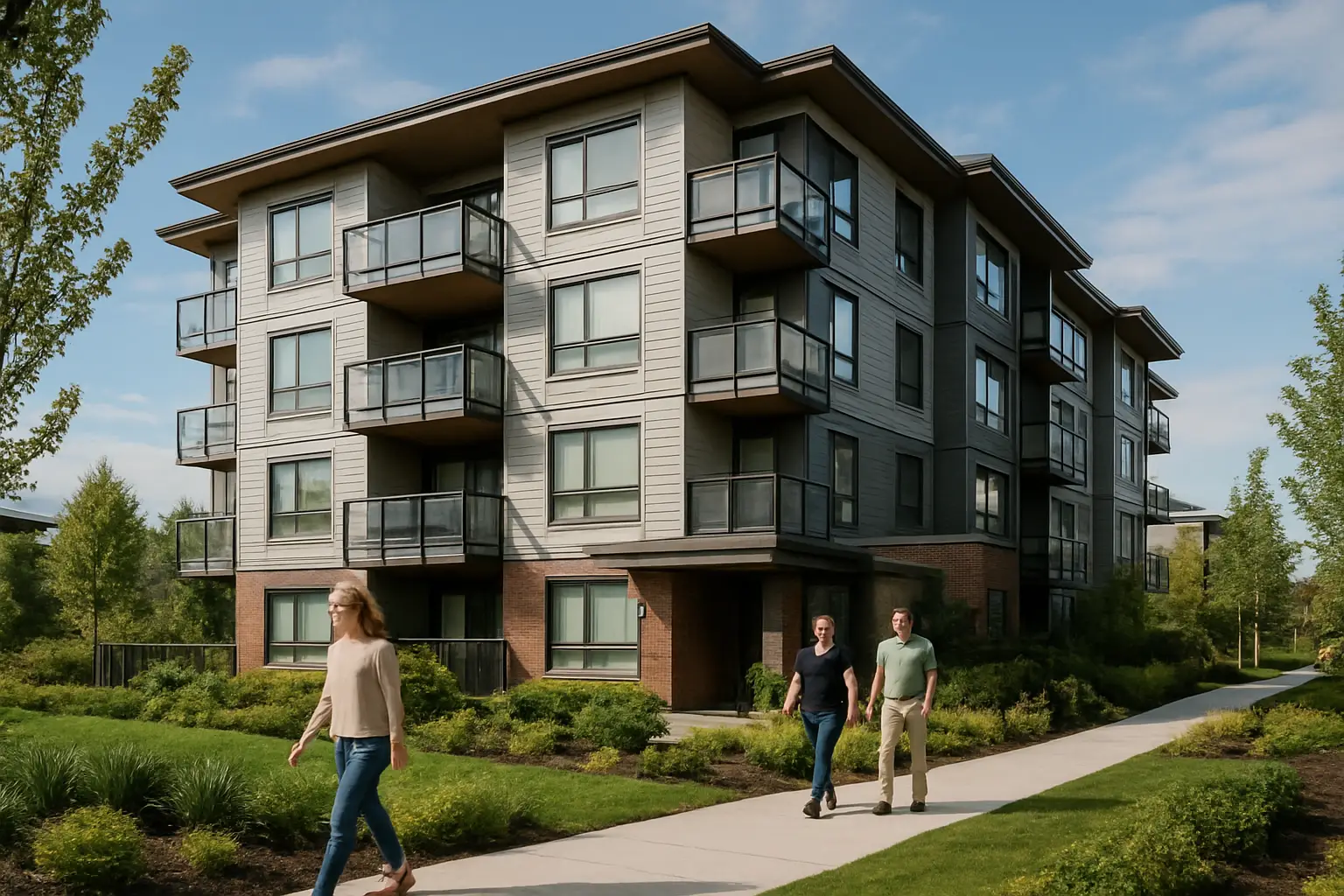
The Township of Langley has continued planning for more diverse housing and transit-oriented development in Willoughby, particularly around the 200 Street corridor. Its updated Willoughby planning framework includes multiple-unit development such as apartment, townhouse and rowhouse forms.
For buyers, that variety is useful.
It means you may be able to compare several ownership formats without completely changing your preferred community.
But it also means that searching only by number of bedrooms can be misleading.
A two-bedroom condo, three-bedroom townhouse and compact newer townhouse may solve very different lifestyle problems even when their prices are relatively close.
For the broader neighbourhood picture, start with The Valley Life's Willoughby Heights homes guide.
1. Start With Purchase Price—But Do Not Stop There
Purchase price is usually the first major difference buyers notice.
Condos generally occupy the more accessible end of the strata market, while townhouses usually command more because they commonly provide additional interior space, direct entrances, more parking and sometimes private outdoor areas.
But the lowest purchase price does not necessarily mean the lowest overall housing cost.
When a Condo Can Make Financial Sense
A condo may allow you to:
enter the Willoughby market with less capital;
make a smaller down payment;
reduce the mortgage amount;
keep more savings available after closing;
avoid paying for rooms you do not need.
This can be especially relevant for a Willoughby first-time buyer who wants to preserve an emergency fund rather than use every available dollar to move up in property type.
When Paying More for a Townhouse May Make Sense
A townhouse can be worth the additional cost when the extra space prevents another move in only a few years.
For example, stretching from a condo to a townhouse may make sense when you already know you will need:
an additional bedroom;
a home office;
children's space;
a garage;
substantial storage;
more separation between household members.
The correct comparison is therefore not simply:
Which property costs less today?
It is:
Which property provides enough utility for the length of time I expect to own it?
2. Compare the Total Monthly Cost
Your mortgage payment is only one component of ownership.
When deciding whether to buy a condo or townhouse in Willoughby, compare the full monthly picture.
Include:
mortgage payment;
strata fee;
property taxes;
home insurance;
utilities not included in strata fees;
parking costs where applicable;
commuting costs;
maintenance you remain responsible for;
a personal reserve for unexpected expenses.
B.C. strata owners share common expenses through their strata corporations and may also be responsible for special levies. Strata fees fund budgeted common expenses, while contingency reserve funds are used for less frequent common expenses such as major repairs and replacements.
Do Not Compare Strata Fees Without Comparing What They Cover
A $350 monthly fee and a $500 monthly fee do not necessarily represent the same value.
Check whether the fee includes items such as:
water;
hot water;
landscaping;
garbage;
building maintenance;
amenity costs;
insurance for the strata corporation;
property management;
contributions to the contingency reserve fund.
A higher fee can sometimes reflect a building with more services. A lower fee can sometimes reflect fewer shared costs.
The number needs context.
3. How Much Space Do You Really Need?
Space is often the strongest argument for moving from a condo to a townhouse.
But more square footage is useful only if you actually need it.
A Condo May Be Enough If:
you live alone or as a couple;
you need one bedroom plus a flexible den;
you spend little time maintaining outdoor areas;
you travel frequently;
you expect to move again before your household grows;
location matters more than interior size.
A Townhouse May Work Better If:
you have children or expect to;
you need three or more bedrooms;
two people work from home;
you regularly host family;
you need significant storage;
you want living areas separated from bedrooms;
you expect to remain in the home longer.
Think About Layout, Not Just Square Footage
A well-designed condo can sometimes feel more functional than a larger but awkward townhouse.
Likewise, a townhouse with stairs on several levels may show a large total square footage but divide that space differently from a single-level condo.
During viewings, ask yourself:
Where will daily life actually happen?
4. Think Carefully About Stairs
Townhouse living often means stairs.
Many Willoughby townhouses use two- or three-level designs, sometimes with garage and entry space on the lowest level and living areas above.
For some buyers, that separation is a benefit.
For others, it can become a daily inconvenience.
Consider:
young children;
strollers;
groceries;
pets;
mobility limitations;
aging parents;
long-term accessibility;
moving furniture between levels.
A condo with elevator access and one-level living may be more practical for someone prioritizing accessibility.
A family wanting separation between children's rooms and entertaining space may prefer the townhouse layout.
5. Parking Can Change the Decision Quickly
Do not treat parking as a minor detail.
It can materially affect whether a home works.
Condo Parking Questions
Check:
how many stalls come with the unit;
whether they are assigned or legally attached in another manner;
visitor-parking availability;
EV charging arrangements;
additional parking availability;
vehicle-size restrictions.
Townhouse Parking Questions
Check:
whether there is a single or double garage;
whether the driveway can legally be used for parking;
visitor parking;
garage dimensions;
storage versus vehicle space;
rules about commercial or oversized vehicles.
A household with two vehicles may find that a townhouse with usable garage and driveway parking solves a significant lifestyle problem.
A one-car household close to everyday services may place much less value on the same feature.
6. How Important Is Private Outdoor Space?
One of the practical differences in a Willoughby townhouse vs condo comparison is outdoor space.
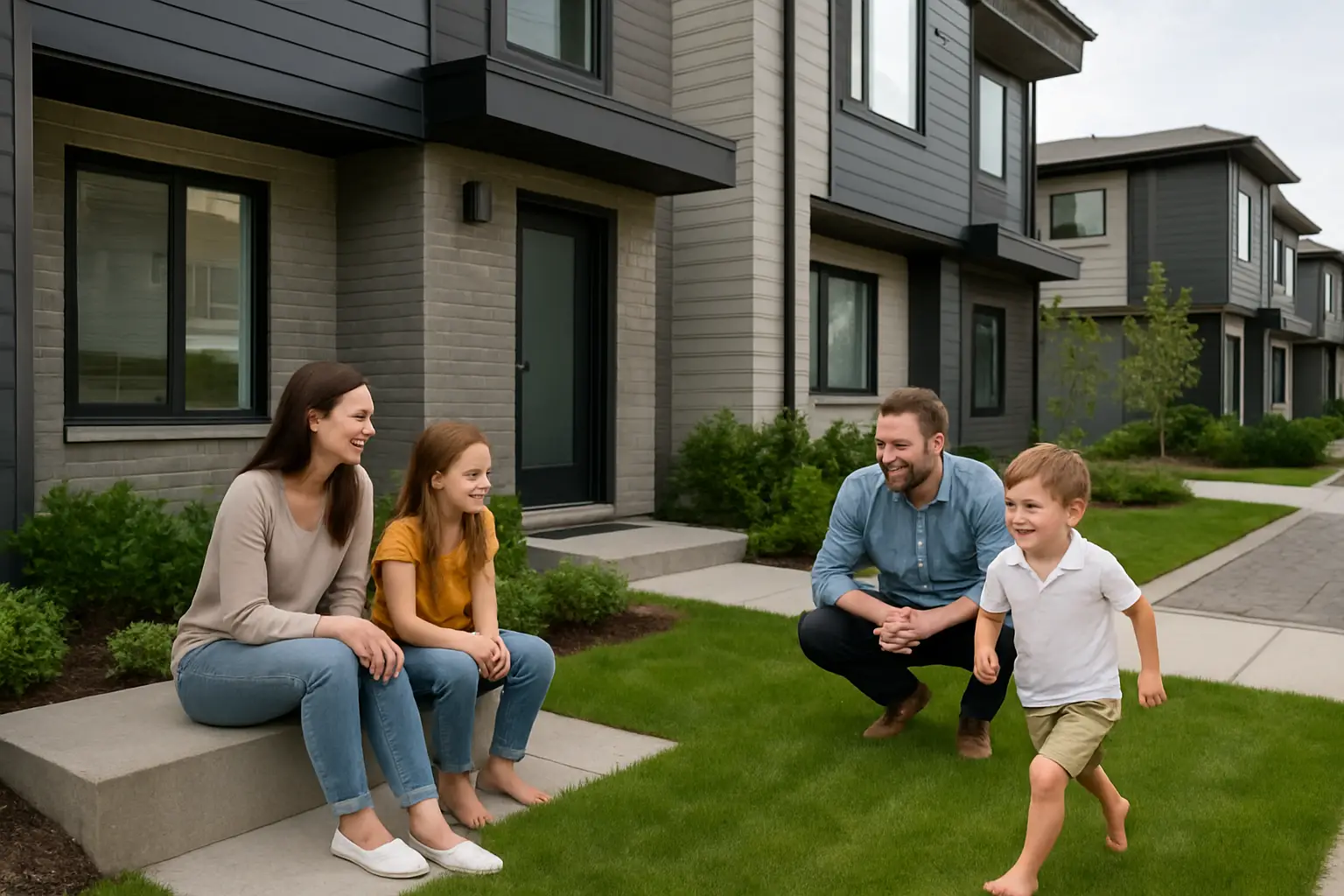
Townhouses may offer:
fenced yards;
patios;
decks;
rooftop decks;
direct exterior entrances.
Condos more commonly offer:
balconies;
patios;
shared courtyards;
rooftop amenity areas.
But never assume a townhouse yard gives you unrestricted control.
In a strata property, areas that appear private may form part of the strata lot, limited common property or common property, and bylaws can regulate their use.
If outdoor space matters because of children, pets, gardening or entertaining, verify exactly what you can do with it.
7. Maintenance: How Much Responsibility Do You Want?
Both condos and strata townhouses reduce some maintenance compared with many detached homes.
But the ownership experience can still differ.
Condo Lifestyle
Apartment-style condo living can mean fewer exterior maintenance tasks for the individual owner.
That can appeal to buyers who want:
a lock-and-leave property;
less outdoor upkeep;
simpler seasonal maintenance;
less physical responsibility for exterior areas.
Townhouse Lifestyle
A townhouse may feel closer to traditional house living.
Depending on the strata and bylaws, owners may have more responsibility for:
patios;
yards;
exterior alterations;
garages;
limited common property;
portions of the unit not covered by strata obligations.
Do not rely on assumptions.
Review the strata documents to establish what the strata maintains and what falls to the owner.
8. Which Is Better for a First-Time Buyer?
For many first-time buyers, a condo deserves serious consideration because it can provide a more manageable entry point.
The benefit is not simply getting the lowest possible mortgage.
A smaller purchase can also leave room for:
closing costs;
moving expenses;
furniture;
emergency savings;
future strata increases;
repairs inside the unit;
lifestyle spending.
Avoid Becoming House-Poor Just to Buy a Townhouse
If buying the townhouse requires using nearly all available savings and leaves little flexibility every month, the extra bedroom may not improve your quality of life.
A condo that fits comfortably within the budget can sometimes be the stronger first purchase.
On the other hand, a buyer expecting their household to change quickly may conclude that buying a suitable townhouse now is preferable to paying the costs of another move shortly afterward.
Run both scenarios through the mortgage calculator rather than choosing based only on the maximum mortgage available to you.
9. Which Is Better for a Move-Up Buyer?
A Willoughby move-up buyer often has a different problem.
The question may not be whether a condo is affordable.
It may be whether a townhouse provides enough additional utility to justify selling the current home and moving.
Consider what you are trying to gain.
Is it:
a third bedroom?
a garage?
a yard?
another bathroom?
an office?
a better school routine?
room for another child?
greater privacy?
If the townhouse does not solve the problem that caused you to move, the transaction may not accomplish much.
Define the upgrade before searching.
10. Family Needs Can Favour a Townhouse—but Not Always
Families often gravitate toward townhouses because of additional bedrooms, direct entrances and outdoor areas.
But household fit depends on the specific property.
A family may prefer a condo when it provides:
enough bedrooms;
a large functional layout;
elevator access;
nearby parks or services;
less maintenance;
a more convenient location.
Another family may strongly prefer a townhouse because of:
a fenced yard;
garage storage;
extra bathrooms;
separated bedrooms;
easier loading and unloading;
more room for children.
Instead of searching for “family-friendly” listings, write down what your household actually needs.
11. Location and Walkability Can Be More Important Than Property Type
Not every part of Willoughby offers the same daily routine.
The Township's updated planning direction emphasizes diverse housing and transit-oriented development, with the 200 Street corridor playing an important role in future transportation and land-use planning.
That makes the specific pocket important.
A buyer may prefer a condo when it allows easier access to:
shops;
restaurants;
services;
transit;
everyday errands.
Another buyer may accept more driving in exchange for a townhouse location that provides:
more interior space;
quieter residential surroundings;
garage parking;
private outdoor space.
Compare the Daily Routine
Before deciding, test the locations based on your normal week.
Consider:
morning commute;
school or daycare;
grocery trips;
transit access;
recreation;
dog walking;
evening errands;
weekend driving.
A home that saves fifteen minutes several times a week may have more lifestyle value than an extra room you rarely use.
12. Condo vs Townhouse Strata Fees: Which Is Usually Better?
There is no reliable rule that one property type always has better strata fees.
The fee depends on the specific strata's expenses.
A condo building may have costs involving:
elevators;
underground parking;
common hallways;
mechanical systems;
amenity spaces.
A townhouse complex may have expenses involving:
private roads;
landscaping;
roofs;
exterior building components;
fences;
drainage;
shared amenities.
B.C. strata corporations are responsible for common expenses, reserve planning and insurance, and the actual allocation of responsibilities depends on the property and governing documents.
Compare the strata, not simply the housing label.
13. Look Beyond Today's Strata Fee
A low current strata fee does not tell you everything about future ownership costs.
For strata corporations with five or more lots, B.C.'s current framework generally requires depreciation reports every five years. These reports examine common property and assets and project repair and replacement costs over a 30-year period.
When comparing properties, consider:
current strata fees;
contingency reserve fund;
depreciation report;
meeting minutes;
major projects;
insurance;
special levies;
bylaws.
This applies to both condos and townhouses.
A townhouse is not automatically financially safer simply because it looks more like a house.
14. New Construction vs Resale Adds Another Layer
Willoughby buyers may also find themselves comparing a newer or presale home with an established resale property.
That creates a second decision:
condo vs townhouse, and new vs resale.
Potential Advantages of New Construction
Depending on the project, buyers may value:
contemporary layouts;
modern finishes;
newer building systems;
energy-efficient features;
EV infrastructure;
new-home warranty coverage;
lower immediate renovation needs.
Questions to Consider With New Construction
Also review:
total purchase price;
GST implications where applicable;
completion timing;
deposit schedule;
what is actually included;
parking and storage;
estimated strata fees;
development disclosure documents;
potential construction around the project;
whether your circumstances could change before completion.
Explore new construction in the Fraser Valley if you want to compare current opportunities with resale options.
Potential Advantages of Resale
A resale property can give you more existing information to assess.
You may be able to review:
strata operating history;
actual strata fees;
meeting minutes;
financial statements;
depreciation reports;
completed maintenance;
established landscaping;
existing neighbourhood conditions.
Neither new nor resale is automatically superior.
The best option depends on your priorities and tolerance for uncertainty.
15. Think About Resale Before You Buy

You should primarily buy a home that works for you.
But it is still reasonable to think about the next buyer.
Features that can influence future buyer appeal include:
practical floor plan;
bedroom count;
parking;
storage;
outdoor space;
natural light;
location;
strata condition;
monthly ownership costs;
accessibility;
proximity to services.
Condos Can Appeal to a Broad Entry-Level Market
Well-positioned condos may attract:
first-time buyers;
downsizers;
investors where permitted and appropriate;
singles;
couples.
Townhouses Can Appeal to Buyers Needing More Space
Townhouses may attract:
growing families;
move-up buyers;
households needing an office;
buyers wanting more parking or storage;
people seeking a middle ground between condos and detached homes.
That does not guarantee a particular resale result.
Market conditions at the time you eventually sell will still matter.
16. Condo vs Townhouse: Side-by-Side Willoughby Comparison
Purchase Price
Condo: Often provides a more accessible entry point.
Townhouse: Usually requires a larger initial budget.
Ask yourself: How much cash do I want left after closing?
Interior Space
Condo: Often smaller and usually one level.
Townhouse: Typically offers more rooms and separation.
Ask yourself: Which rooms will I actually use?
Parking
Condo: Often one stall, although this varies significantly.
Townhouse: May provide a garage and additional parking.
Ask yourself: How many vehicles must the home realistically accommodate?
Outdoor Space
Condo: Balcony, patio or common areas are typical.
Townhouse: Private-feeling patios or yards are more common.
Ask yourself: Is outdoor space essential or simply nice to have?
Maintenance
Condo: Often offers the simplest maintenance lifestyle.
Townhouse: Can involve more owner-maintained areas depending on the strata.
Ask yourself: How much maintenance do I want to handle personally?
Accessibility
Condo: One-level living may be easier for some households.
Townhouse: Multiple stairs are common.
Ask yourself: Will this layout still work several years from now?
Family Flexibility
Condo: Can work well for smaller households.
Townhouse: Often offers more room to grow.
Ask yourself: How likely is my household to change?
Walkability
Condo: Some developments may place buyers closer to commercial and transit-oriented areas.
Townhouse: Location varies widely and may involve more driving.
Ask yourself: What does my weekly routine look like?
17. A Simple Buyer Decision Framework
If you are still unsure, work through the decision in this order.
Step 1: Establish a Comfortable Monthly Budget
Do not begin with the maximum purchase price.
Begin with the monthly payment you can comfortably maintain.
Use the mortgage calculator to compare scenarios.
Step 2: Identify Your Non-Negotiables
Choose three to five requirements.
For example:
two parking spaces;
three bedrooms;
dog-friendly;
home office;
maximum monthly housing cost.
Step 3: Separate Needs From Preferences
A garage may be essential.
Quartz countertops probably are not.
Do this before browsing listings.
Step 4: Compare Real Properties in Both Categories
Do not make the decision theoretically.
Compare actual condos and townhouses within the same realistic budget.
Step 5: Review the Strata
Once a property becomes serious, review the appropriate strata documentation and obtain professional advice where needed.
Step 6: Think Three to Five Years Ahead
Ask whether the property still works if:
you have a child;
you change jobs;
you work from home;
you acquire another vehicle;
a family member moves in;
mortgage costs change.
You cannot predict everything.
You can avoid buying a home that already feels too small on possession day.
Frequently Asked Questions
Is a condo or townhouse cheaper in Willoughby?
Condos will often have a lower purchase price than otherwise comparable townhouses, but individual listings vary significantly. Compare the complete monthly cost rather than purchase price alone.
Is a townhouse better for a family in Willoughby?
It can be, particularly if the household needs additional bedrooms, parking, storage or outdoor space. However, a well-located and efficiently designed condo may work better for some families. Household needs should determine the choice.
Is a condo better for a Willoughby first-time buyer?
A condo can provide a more accessible entry point and may allow the buyer to retain more savings after closing. Buyers should still compare strata finances, monthly fees and long-term suitability rather than purchasing solely because the price is lower.
Do townhouses have strata fees in Willoughby?
Many Willoughby townhouses are strata properties and therefore have strata fees. The amount and what those fees cover vary by development.
Are townhouse strata fees always lower than condo fees?
No. The fee depends on the individual strata corporation's operating costs, common property, insurance, maintenance obligations, reserve contributions and amenities.
Is a newer Willoughby condo better than an older townhouse?
Not automatically. A newer condo may offer newer building systems and modern features, while an established townhouse may provide more space and a longer operating history to review. Compare the actual properties rather than relying only on age.
Should I buy new construction or resale in Willoughby?
New construction may appeal if you value modern finishes, newer systems and warranty coverage. Resale may offer more established strata records and immediate possession. Financing, taxes, completion timing, disclosure documents and your tolerance for uncertainty should also be considered.
Which has better resale value: a condo or townhouse?
There is no universal answer. Future value depends on market conditions, location, condition, layout, supply, buyer demand, strata health and the specific property. Choose a home with practical characteristics rather than assuming one property type will always appreciate faster.
Final Takeaway: Condo or Townhouse in Willoughby?
The best answer to Willoughby condo vs townhouse starts with your life rather than the property label.
Choose a condo when keeping the purchase and monthly costs manageable, simplifying maintenance and securing the right location matter more than having maximum space.
Choose a townhouse when additional bedrooms, parking, storage, privacy or outdoor space will materially improve how your household functions—and when the higher cost remains comfortable.
Most importantly, compare real options at the same budget.
A $700,000 condo should not be compared with a $950,000 townhouse simply because both appear in your search results. Compare what your money actually buys within a payment range you can sustain.
Use The Valley Life's mortgage calculator to establish your budget first.
Then review the Willoughby Heights homes guide for local context, explore new construction in the Fraser Valley if newer housing is part of your search, and learn more about buying with The Valley Life.
The next step is not to search every Willoughby listing.
It is to narrow the search by budget, property type, Willoughby pocket, parking, space requirements and lifestyle, so the homes you view already have a realistic chance of fitting.
 The data relating to real estate on this website comes in part from the MLS® Reciprocity program of either the Greater Vancouver REALTORS® (GVR), the Fraser Valley Real Estate Board (FVREB) or the Chilliwack and District Real Estate Board (CADREB). Real estate listings held by participating real estate firms are marked with the MLS® logo and detailed information about the listing includes the name of the listing agent. This representation is based in whole or part on data generated by either the GVR, the FVREB or the CADREB which assumes no responsibility for its accuracy. The materials contained on this page may not be reproduced without the express written consent of either the GVR, the FVREB or the CADREB.